Ryzen 5 3500U環境でnested esxiを作ろうとしたらディスクが見えない

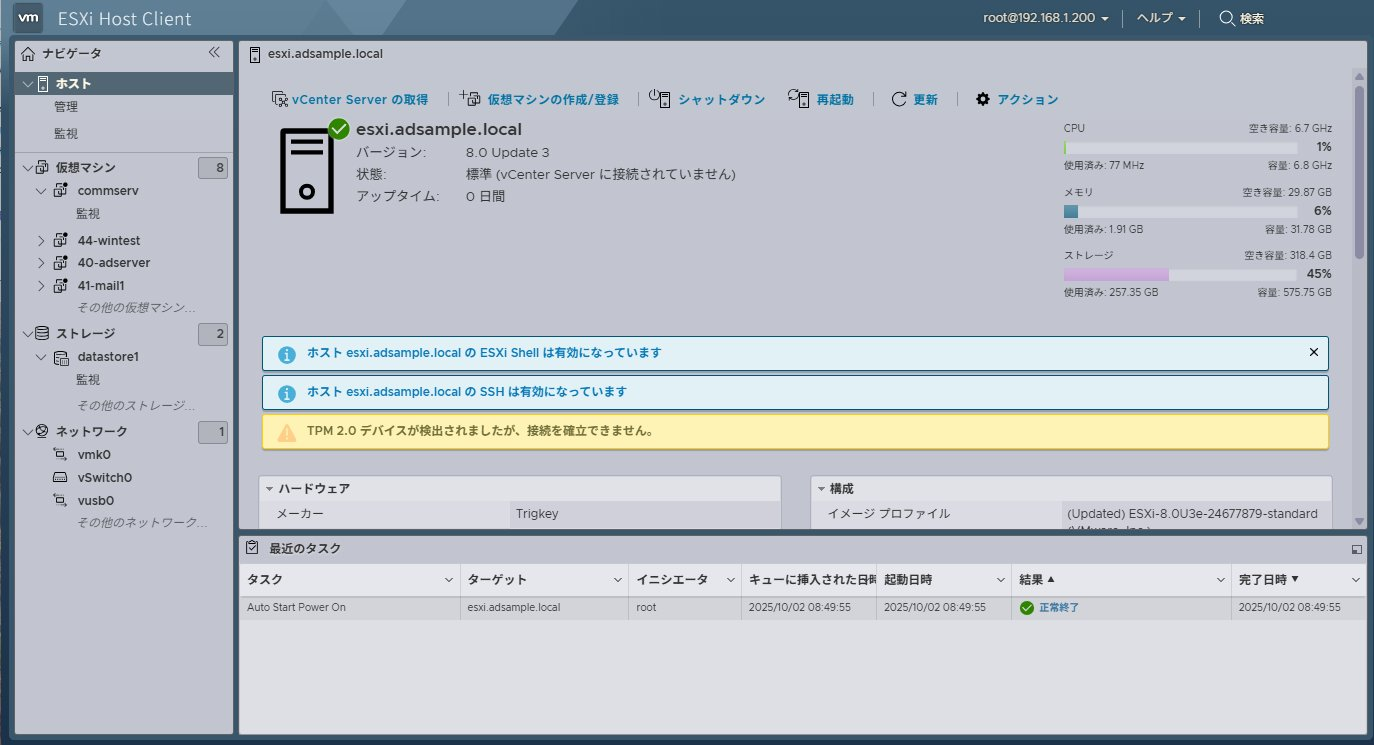
GMKtec NucBox G10 mini にESXi8 Freeをインストールして使っているんだけど、ESXi 7からESXi 8へのバージョンアップ手順を確認したくて、nested esxi環境を作ろうとした・・・

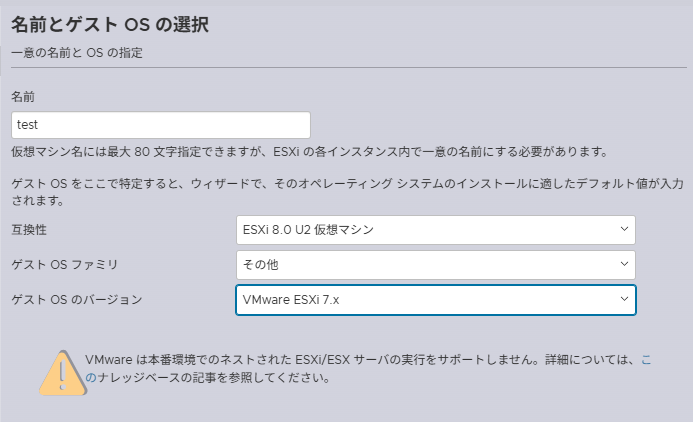
仮想マシンを[その他]-[VMware ESXi 7.x]で作成して

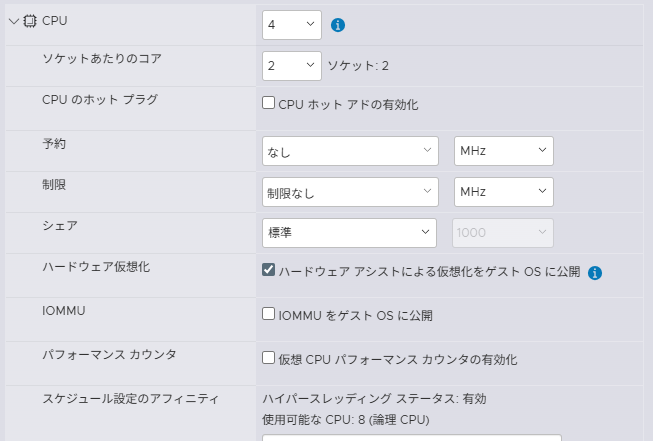
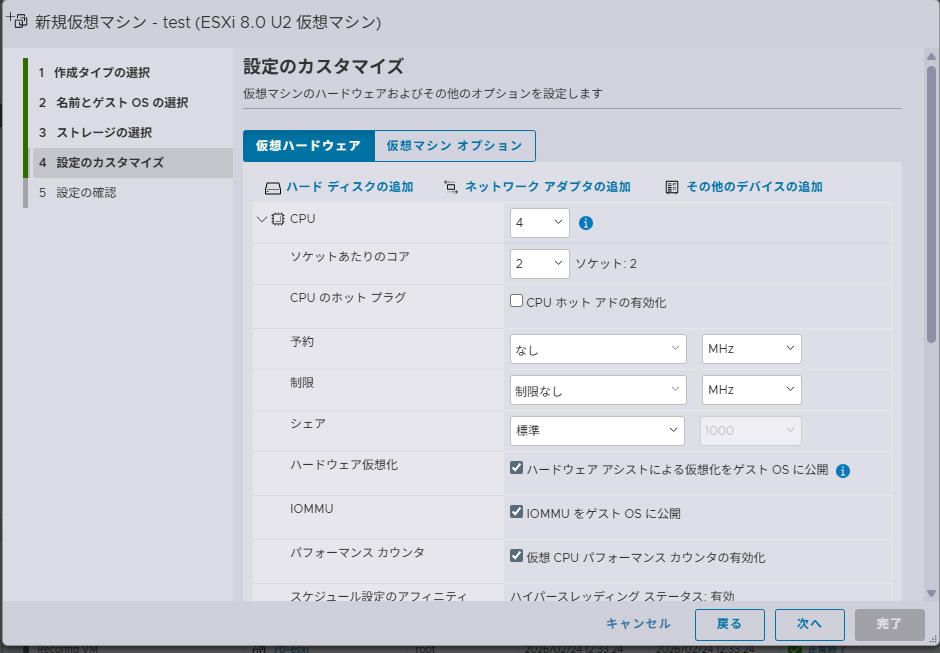
仮想マシンのCPU設定は詳細を開いて「ハードウェア仮想化」「IOMMU」「パフォーマンスカウンター」にチェックを入れて

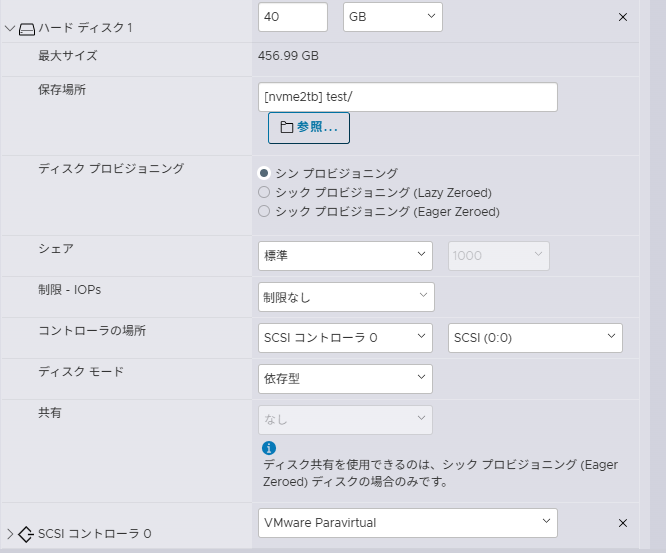
SCSIコントローラは「VMware Paravirtual(PVSCSI)」で、ディスクはscsi0 で接続して作成

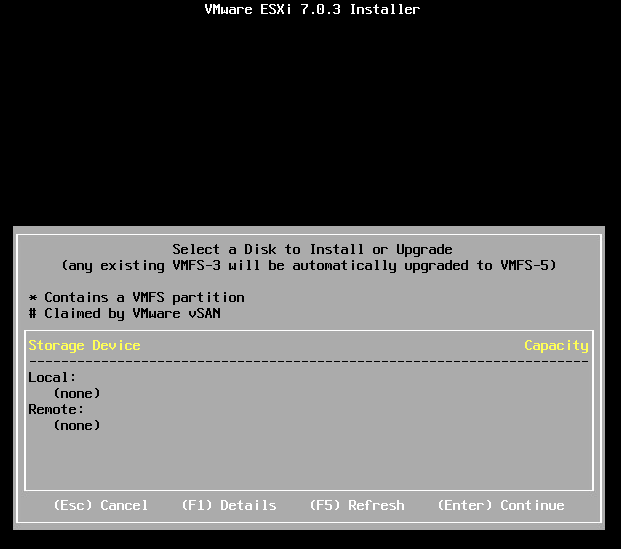
これでインストールを進めると選択できるディスクがない

この状態で、AlmaLinux 9.7のISOで起動すると普通にインストールできて起動してくる。

いろいろ悩んだ結果・・・

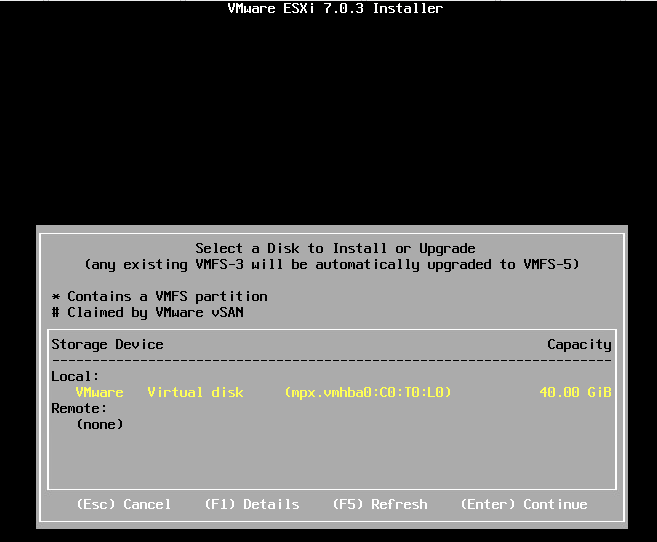
「IOMMU」と「パフォーマンスカウンター」のチェックを外してみたところ

ディスクが見えるようになりました

Intel N97環境でNested ESXiをインストールした際は、IOMMIとパフォーマンスカウンターにチェックが入っていてもディスクを認識してくれたのに、Ryzen 5 3500U環境ではダメなようです。

Intel N95搭載PCでUSB NICをつけてESXi 8.0を使った場合再起動すると通信できなくなる件の対処方法

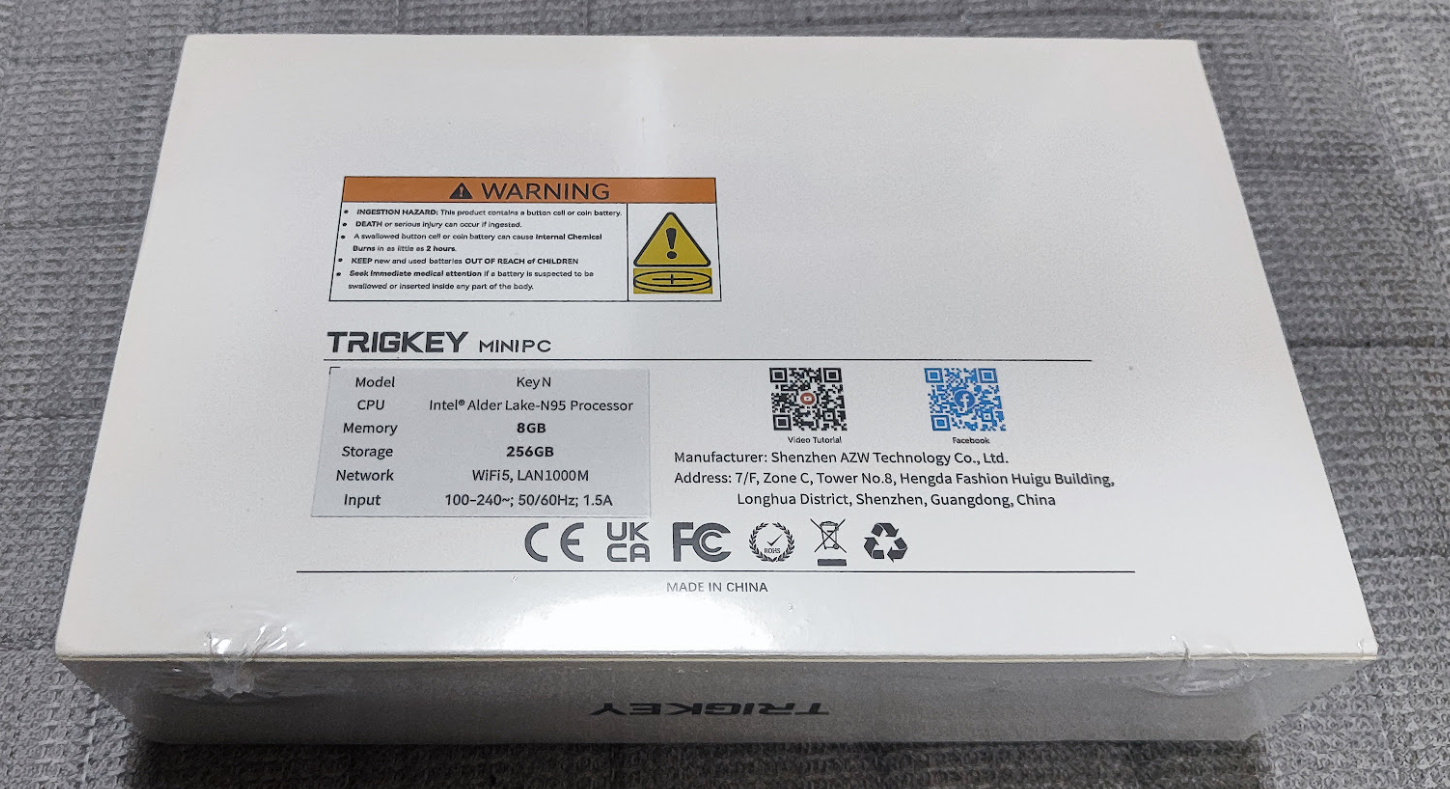
Intel N95搭載のミニPC TRIGKEY MINI PC Key N に32GBメモリを載せたので、仮想基盤にしてみるかと、VMware ESXi 8.0の無償ライセンス版をインストールしてようと思った。

標準状態ではオンボードNICを認識してくれず、インストール不可。

手持ちのUSB NICをさしたところNICとして認めてくれたようで、ESXiのインストールが出来た。

ただ、動作が少しおかしい

再起動するとネットワーク接続ができなくなる

ESXiのコンソールでみるとIPアドレスはきちんと割り当てられている

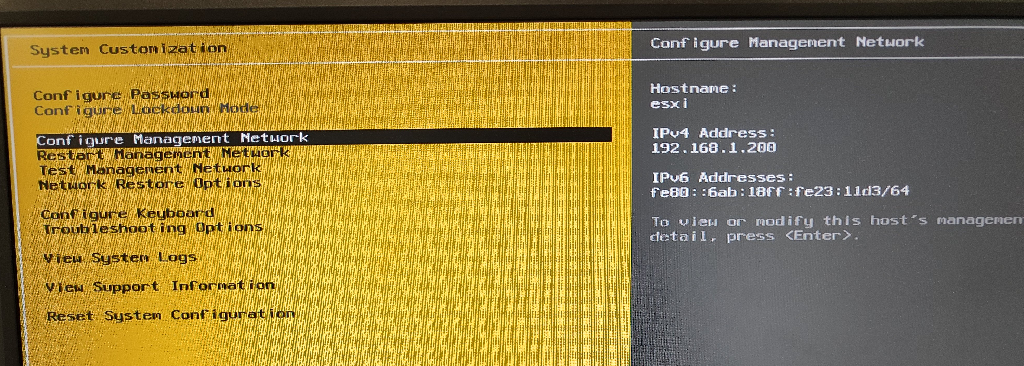
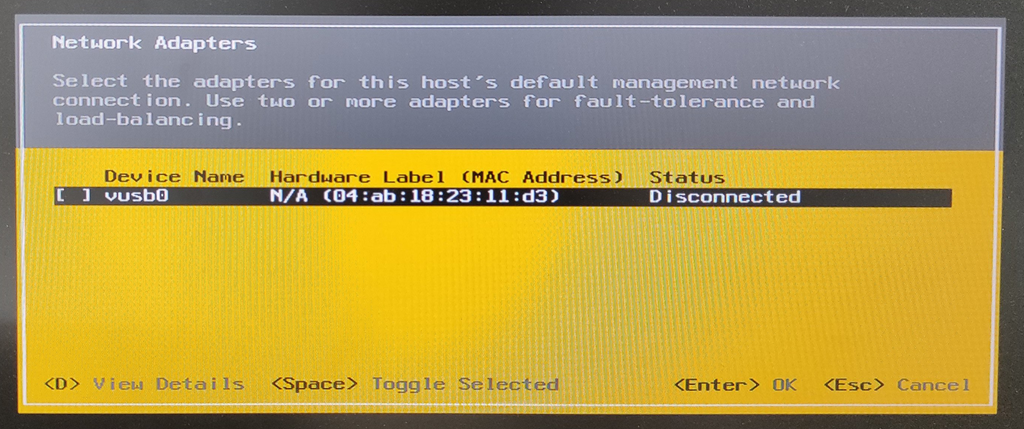
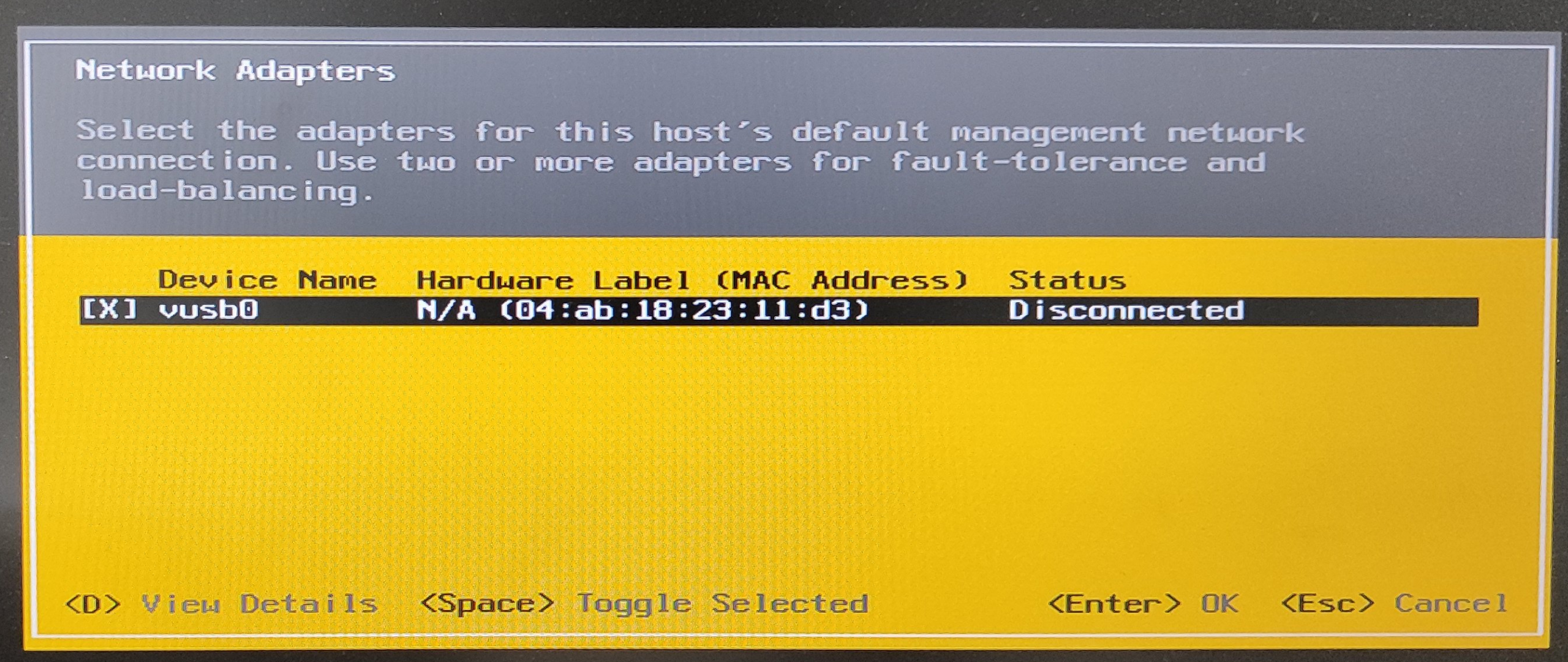
しかし[Configure Management Network]-[Network Adapters]を確認すると、アダプタの割り当てが外れている

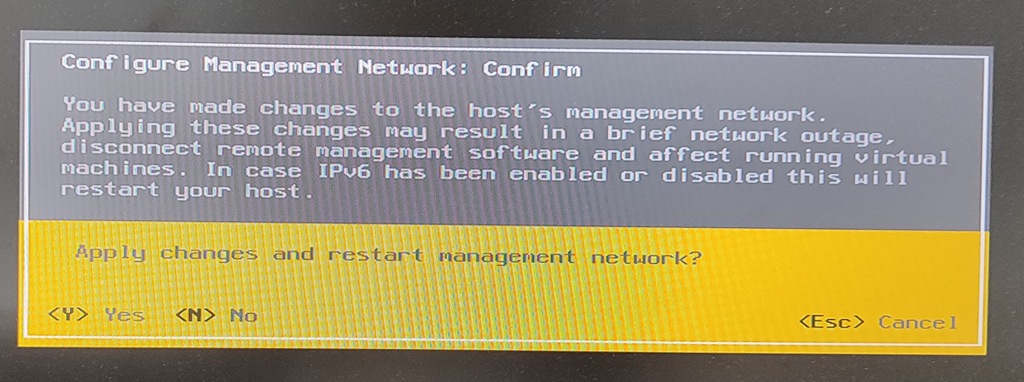
チェックを入れ直して設定保存するとESXi自体のネットワークが通るようになる

この設定を行うまでは、ESXiサーバから外部へのping/sshはできないし、外部からESXiのWebアクセスもできない

原因調査

Ctrl-Alt-F1でESXi shellを開いて「esxcli network vswitch standard list」で設定を取ると、再起動直後は下記で、UplinkにNICが登録されていない

[root@esxi:~] esxcli network vswitch standard list vSwitch0
   Name: vSwitch0
   Class: cswitch
   Num Ports: 2560
   Used Ports: 2
   Configured Ports: 128
   MTU: 1500
   CDP Status: listen
   Beacon Enabled: false
   Beacon Interval: 1
   Beacon Threshold: 3
   Beacon Required By:
   Uplinks:
   Portgroups: VM Network, Management Network
[root@esxi:~] 

ESXiコンソールから設定修正を行ったあとは以下に変わる

[root@esxi:~] esxcli network vswitch standard list vSwitch0
   Name: vSwitch0
   Class: cswitch
   Num Ports: 2560
   Used Ports: 4
   Configured Ports: 128
   MTU: 1500
   CDP Status: listen
   Beacon Enabled: false
   Beacon Interval: 1
   Beacon Threshold: 3
   Beacon Required By:
   Uplinks: vusb0
   Portgroups: VM Network, Management Network
[root@esxi:~] 

Uplinksが未割り当てとなったことが原因の様に見えるのでESXiコンソールからの操作の代わりに「esxcli network vswitch standard uplink add –vswitch-namevSwitch0 –uplink-name=vusb0」を実行してみたものの ネットワークがつながらず、ESXiコンソール操作を実行しなければならなかった。

ESXiコンソール操作の変更反映画面に「Configure Management Network」とあるのでvSwitchの設定だけではなくポートグループ設定周りも見直す必要があるのでは?と esxcli network vswitch standard のオプション類をいろいろ探していくと、esxcli network vswitch standard portgroup policy failover にて怪しい状況を発見

[root@esxi:~] esxcli network vswitch standard portgroup policy failover get --portgroup-name="Management Network"
   Load Balancing: srcport
   Network Failure Detection: link
   Notify Switches: true
   Failback: true
   Active Adapters:
   Standby Adapters:
   Unused Adapters: vusb0
   Override Vswitch Load Balancing: true
   Override Vswitch Network Failure Detection: true
   Override Vswitch Notify Switches: true
   Override Vswitch Failback: true
   Override Vswitch Uplinks: true
[root@esxi:~] esxcli network vswitch standard portgroup policy failover get --portgroup-name="VM Network"
   Load Balancing: srcport
   Network Failure Detection: link
   Notify Switches: true
   Failback: true
   Active Adapters:
   Standby Adapters:
   Unused Adapters: vusb0
   Override Vswitch Load Balancing: false
   Override Vswitch Network Failure Detection: false
   Override Vswitch Notify Switches: false
   Override Vswitch Failback: false
   Override Vswitch Uplinks: false
[root@esxi:~] 

「Management Network」と「VM Network」のポートグループに割り当てられているはずのvusb0が「Unused Adapters」に割り当てられている

これらを 「Active Adapters」に割り当て直せばいいのか?とCLIで設定変更を行ってみる

[root@esxi:~] esxcli network vswitch standard portgroup policy failover set --portgroup-name="Management Network" --active-uplinks=vusb0
[root@esxi:~] esxcli network vswitch standard portgroup policy failover set --portgroup-name="Management Network"
   Load Balancing: srcport
   Network Failure Detection: link
   Notify Switches: true
   Failback: true
   Active Adapters: vusb0
   Standby Adapters:
   Unused Adapters:
   Override Vswitch Load Balancing: true
   Override Vswitch Network Failure Detection: true
   Override Vswitch Notify Switches: true
   Override Vswitch Failback: true
   Override Vswitch Uplinks: true
[root@esxi:~] 

ポートグループManagement Networkについての設定変更でESXi上から外部ネットワークへ通信が可能となった

この状況では仮想マシンを起動しても、VM NetworkのActive Adaptersが設定されていないため外部ネットワークに接続できない。

続いてVM NetworkのUnsed Adapterについて設定変更を実施

[root@esxi:~] esxcli network vswitch standard portgroup policy failover set --portgroup-name="VM Network" --active-uplinks=vusb0
[root@esxi:~] 
   Load Balancing: srcport
   Network Failure Detection: link
   Notify Switches: true
   Failback: true
   Active Adapters: vusb0
   Standby Adapters:
   Unused Adapters:
   Override Vswitch Load Balancing: false
   Override Vswitch Network Failure Detection: false
   Override Vswitch Notify Switches: false
   Override Vswitch Failback: false
   Override Vswitch Uplinks: true
[root@esxi:~] 

この設定実行後、仮想マシンからの外部への通信も成功した

ESXi再起動後、再設定を行い、再現性があることも確認した。

ESXiのパラメータ設定で対応可能

最初は後述の「起動時にコマンドを自動実行させる方法」を使っていたのだが、unused adapterで調べ直すと usbBusFullScanOnBootEnabled パラメータを設定することで対処できる、という話を発見

ESXi 7.0 Update 2 enhancement for USB NIC only installations」の後半に書かれている

ESXiの起動時、ESXiのvSwitch設定プロセスよりあとにUSB NICの認識が行われていることで登録できない、という状態であるため、最初にUSBデバイスの認識を行う、という順序に変える、というパラメータのようである。

設定の出典を調べると現存しない VMware Flings時代の「USB Network Native Driver for ESXi」の「Persisting USB NIC Bindings」に下記の様に記載されているものだった。

Persisting USB NIC Bindings
Option 1: Run the following ESXCLI command which will enable the driver parameter to perform a full USB bus scan during startup:
esxcli system module parameters set -p “usbBusFullScanOnBootEnabled=1” -m vmkusb_nic_fling

これらの記事は古いので、ESXi 8.0 Update 3eでも該当するモジュール vmkusb_nic_fling とパラメータ usbBusFullScanOnBootEnabled があるのかを確認してみる

[root@esxi:~] esxcli system module list|grep nic
vmkusb_nic_fling                     true        true
[root@esxi:~] esxcli system module list|grep usb
vmkusb_nic_fling                     true        true
[root@esxi:~]

モジュール vmkusb_nic_fling は、ESXi 8.0でも存在している。

モジュールに対して設定できるパラメータを確認。

[root@esxi:~] esxcli system module parameters list -m vmkusb_nic_fling
Name                         Type    Value  Description
---------------------------  ------  -----  -----------
usbBusFullScanOnBootEnabled  int            Enable USB Bus full scan on system boot: 0 No (Default), 1 Yes
usbCdromPassthroughEnabled   int            Enable USB CDROM device for USB passtrough: 0 No (Default), 1 Yes
usbStorageRegisterDelaySecs  int            Delay to register cached USB storage device: Min: 0 second, Max: 600 seconds, Default: 10 seconds
vusb0_mac                    string         Persist vusb0 MAC Address: xx:xx:xx:xx:xx:xx
vusb10_mac                   string         Persist vusb10 MAC Address: xx:xx:xx:xx:xx:xx
vusb11_mac                   string         Persist vusb11 MAC Address: xx:xx:xx:xx:xx:xx
vusb1_mac                    string         Persist vusb1 MAC Address: xx:xx:xx:xx:xx:xx
vusb2_mac                    string         Persist vusb2 MAC Address: xx:xx:xx:xx:xx:xx
vusb3_mac                    string         Persist vusb3 MAC Address: xx:xx:xx:xx:xx:xx
vusb4_mac                    string         Persist vusb4 MAC Address: xx:xx:xx:xx:xx:xx
vusb5_mac                    string         Persist vusb5 MAC Address: xx:xx:xx:xx:xx:xx
vusb6_mac                    string         Persist vusb6 MAC Address: xx:xx:xx:xx:xx:xx
vusb7_mac                    string         Persist vusb7 MAC Address: xx:xx:xx:xx:xx:xx
vusb8_mac                    string         Persist vusb8 MAC Address: xx:xx:xx:xx:xx:xx
vusb9_mac                    string         Persist vusb9 MAC Address: xx:xx:xx:xx:xx:xx
[root@esxi:~]

usbBusFullScanOnBootEnabled が初期値0で存在していることを確認

(“Persisting VMkernel to USB NIC mappings”に記載されている複数のUSB NICがある時に、指す場所を変えてもvusbの番号が変わらないようにするための設定も引き続きある)

現段階のesxcliでの正式オプションに修正して、「esxcli system module parameters set –module=vmkusb_nic_fling –parameter-string=”usbBusFullScanOnBootEnabled=1″」と実行する

[root@esxi:~] esxcli system module parameters set --module=vmkusb_nic_fling --parameter-string="usbBusFullScanOnBootEnabled=1"
[root@esxi:~] esxcli system module parameters list -m vmkusb_nic_fling
Name                         Type    Value  Description
---------------------------  ------  -----  -----------
usbBusFullScanOnBootEnabled  int     1      Enable USB Bus full scan on system boot: 0 No (Default), 1 Yes
usbCdromPassthroughEnabled   int            Enable USB CDROM device for USB passtrough: 0 No (Default), 1 Yes
usbStorageRegisterDelaySecs  int            Delay to register cached USB storage device: Min: 0 second, Max: 600 seconds, Default: 10 seconds
vusb0_mac                    string         Persist vusb0 MAC Address: xx:xx:xx:xx:xx:xx
vusb10_mac                   string         Persist vusb10 MAC Address: xx:xx:xx:xx:xx:xx
vusb11_mac                   string         Persist vusb11 MAC Address: xx:xx:xx:xx:xx:xx
vusb1_mac                    string         Persist vusb1 MAC Address: xx:xx:xx:xx:xx:xx
vusb2_mac                    string         Persist vusb2 MAC Address: xx:xx:xx:xx:xx:xx
vusb3_mac                    string         Persist vusb3 MAC Address: xx:xx:xx:xx:xx:xx
vusb4_mac                    string         Persist vusb4 MAC Address: xx:xx:xx:xx:xx:xx
vusb5_mac                    string         Persist vusb5 MAC Address: xx:xx:xx:xx:xx:xx
vusb6_mac                    string         Persist vusb6 MAC Address: xx:xx:xx:xx:xx:xx
vusb7_mac                    string         Persist vusb7 MAC Address: xx:xx:xx:xx:xx:xx
vusb8_mac                    string         Persist vusb8 MAC Address: xx:xx:xx:xx:xx:xx
vusb9_mac                    string         Persist vusb9 MAC Address: xx:xx:xx:xx:xx:xx
[root@esxi:~]

設定後、ESXiを再起動してもネットワーク接続に問題ないことを確認した。

起動時にコマンドを自動実行させる方法

usbBusFullScanOnBootEnabled パラメータの手法を発見する前は、起動時にこれらの設定を自動的に実行するように設定して対応していた。

ESXi 5.1時代にVMware HA有効時に仮想マシンの自動起動をしたい で使用した rc.local 設定 について調べると 2025年8月更新のKB「Modifying the rc.local or local.sh file in VMware vSphere ESXi to execute commands while booting」にて、vSphere 8でも使用可能とあるため、これを使う

初期状態の /etc/rc.local.d/local.sh の内容を確認

[root@esxi:~] ls -l /etc/rc.local.d
total 32
-r-xr-xr-x    1 root     root           378 Apr  3  2025 009.vsanwitness.sh
drwxr-xr-x    1 root     root           512 Oct  3 00:25 autodeploy
-r-xr-xr-x    1 root     root          2249 Apr  3  2025 backupPrevBootLogs.py
-r-xr-xr-x    1 root     root          2071 Apr  3  2025 cleanupStatefulHost.py
-r-xr-xr-x    1 root     root          2567 Apr  3  2025 kickstart.py
-rwxr-xr-t    1 root     root           506 Apr  3  2025 local.sh
-r-xr-xr-x    1 root     root           397 Apr  3  2025 psaScrub.sh
-r-xr-xr-x    1 root     root          1190 Apr  3  2025 raiseConfigStoreVob.py
[root@esxi:~] cat /etc/rc.local.d/local.sh
#!/bin/sh ++group=host/vim/vmvisor/boot

# local configuration options

# Note: modify at your own risk!  If you do/use anything in this
# script that is not part of a stable API (relying on files to be in
# specific places, specific tools, specific output, etc) there is a
# possibility you will end up with a broken system after patching or
# upgrading.  Changes are not supported unless under direction of
# VMware support.

# Note: This script will not be run when UEFI secure boot is enabled.

exit 0
[root@esxi:~]

今回実行したesxcliのコマンド群を追加

[root@esxi:~] vi /etc/rc.local.d/local.sh
[root@esxi:~] cat /etc/rc.local.d/local.sh
#!/bin/sh ++group=host/vim/vmvisor/boot

# local configuration options

# Note: modify at your own risk!  If you do/use anything in this
# script that is not part of a stable API (relying on files to be in
# specific places, specific tools, specific output, etc) there is a
# possibility you will end up with a broken system after patching or
# upgrading.  Changes are not supported unless under direction of
# VMware support.

# Note: This script will not be run when UEFI secure boot is enabled.

esxcli network vswitch standard uplink add --vswitch-name=vSwitch0 --uplink-name=vusb0
esxcli network vswitch standard portgroup policy failover set --portgroup-name="Management Network" --active-uplinks=vusb0
esxcli network vswitch standard portgroup policy failover set --portgroup-name="VM Network" --active-uplinks=vusb0

exit 0
[root@esxi:~]

以前は auto-backup.sh を手動で実行する必要があったけど、2025/10/03時点のKBには記載がないが、下記で行ったように現時点でもauto-backup.shを実行しないと設定が消えてしまうと思われる。

[root@esxi:~] date
Fri Oct  3 00:57:12 UTC 2025
[root@esxi:~] ls -ltr /bootbank/
total 261895
<略>
-rwx------    1 root     root          1797 Sep 17 16:34 boot.cfg
-rwx------    1 root     root           102 Oct  3 00:25 jumpstrt.gz
-rwx------    1 root     root        266977 Oct  3 00:31 state.tgz
[root@esxi:~]

/bootbank/state.tgz が更新されていない

[root@esxi:~] auto-backup.sh
ConfigStore has been modified since the last backup
Bootbank lock is /var/lock/bootbank/f43b0450-7e4d6762-c6be-52e6552cc1f8
INFO: Successfully claimed lock file for pid 526790
Saving current state in /bootbank
Ssh configuration synced to configstore
Creating ConfigStore Backup
Locking esx.conf
Creating archive
Unlocked esx.conf
Using key ID d27fa69c-5edc-424d-bc0f-61d7966bf4d4 to encrypt
Clock updated.
Time: 00:57:21   Date: 10/03/2025   UTC
[root@esxi:~]

auto-backup.shを実行後を確認

[root@esxi:~] ls -ltr /bootbank/
total 261895
<略>
-rwx------    1 root     root          1797 Sep 17 16:34 boot.cfg
-rwx------    1 root     root           102 Oct  3 00:25 jumpstrt.gz
-rwx------    1 root     root        266974 Oct  3 00:57 state.tgz
[root@esxi:~]

/bootbank/state.tgz が更新された

更新後、ESXiを再起動してみると、ちゃんとネットワークに接続できる状態でESXiが起動することを確認できた


2025/11/03 追記

VMware flingsで配布している「USB Network Native Driver for ESXi」からvmkusb_nic_fling ドライバをインストールすると、使えるUSB NICの種類が増える

[root@esxi:/vmfs/volumes/6908722d-a37ea8a3-525a-4d150daf152f/iso] esxcli software vib install -d /vmfs/volumes/datastore1/iso/ESXi8
03-VMKUSB-NIC-FLING-76444229-component-24179899.zip
Installation Result
   Message: The update completed successfully, but the system needs to be rebooted for the changes to be effective.
   VIBs Installed: VMW_bootbank_vmkusb-nic-fling_1.14-2vmw.803.0.0.76444229
   VIBs Removed:
   VIBs Skipped:
   Reboot Required: true
   DPU Results:
[root@esxi:/vmfs/volumes/6908722d-a37ea8a3-525a-4d150daf152f/iso]
インストール後、再起動は必須

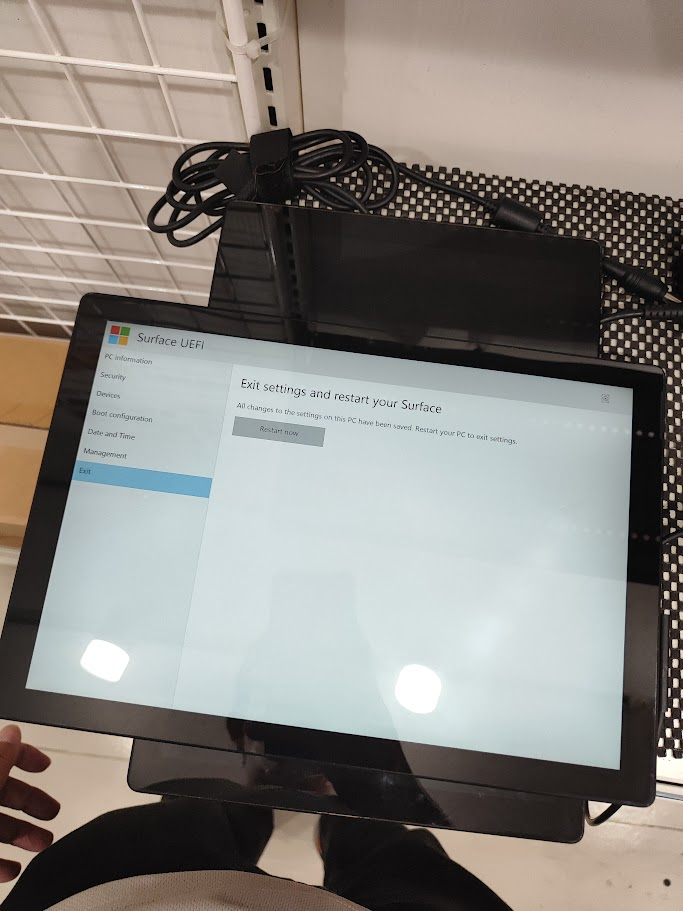
Surface Pro 7を買ったのでWindows 11 をインストールしてみた

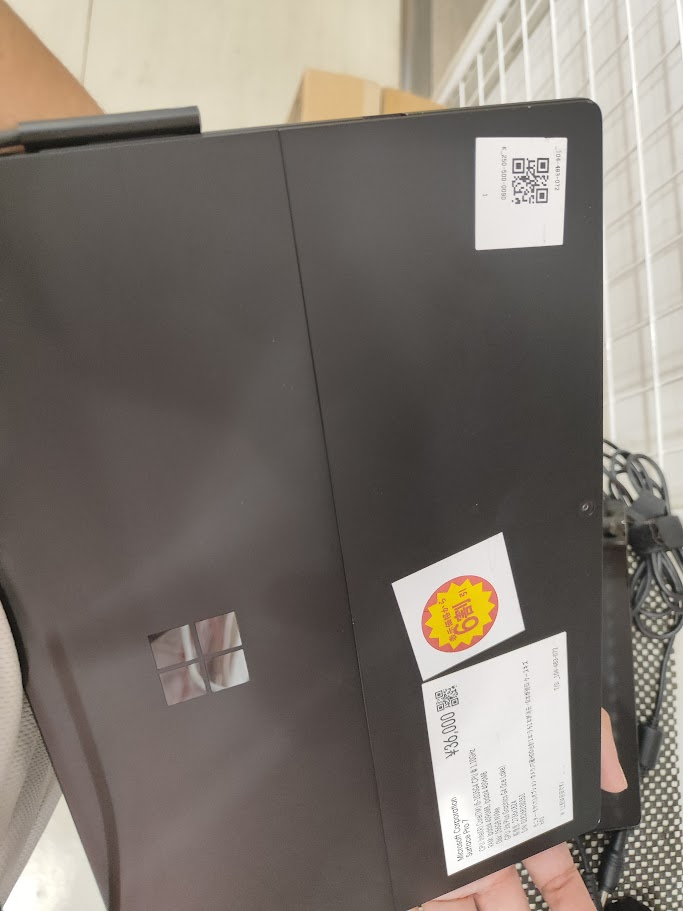
秋葉原でSurface Pro 7の黒が14400円だったので買ってきた

ちゃんとした手順を踏むのであれば、”Surface の USB 回復ドライブの作成と使用“を使うのだが、あえて普通のWindows 11 24H2メディアを使ってインストールを試みた。

この場合も、Surface 用のドライバーとファームウェアをダウンロードする から 「Surface Pro 7 Drivers and Firmware」のドライバ/Firmwareセットをダウンロードすれば終わりなのだが、あえてこれを使わない場合の再インストールを行ってみた。

Windows 11 24H2 メディアのみでの再インストール手法

まず、注意点として、標準的なWindows 11 24H2メディアではSurface Pro 7のタッチパネル操作が行えないため、別途マウスを用意する必要がある。

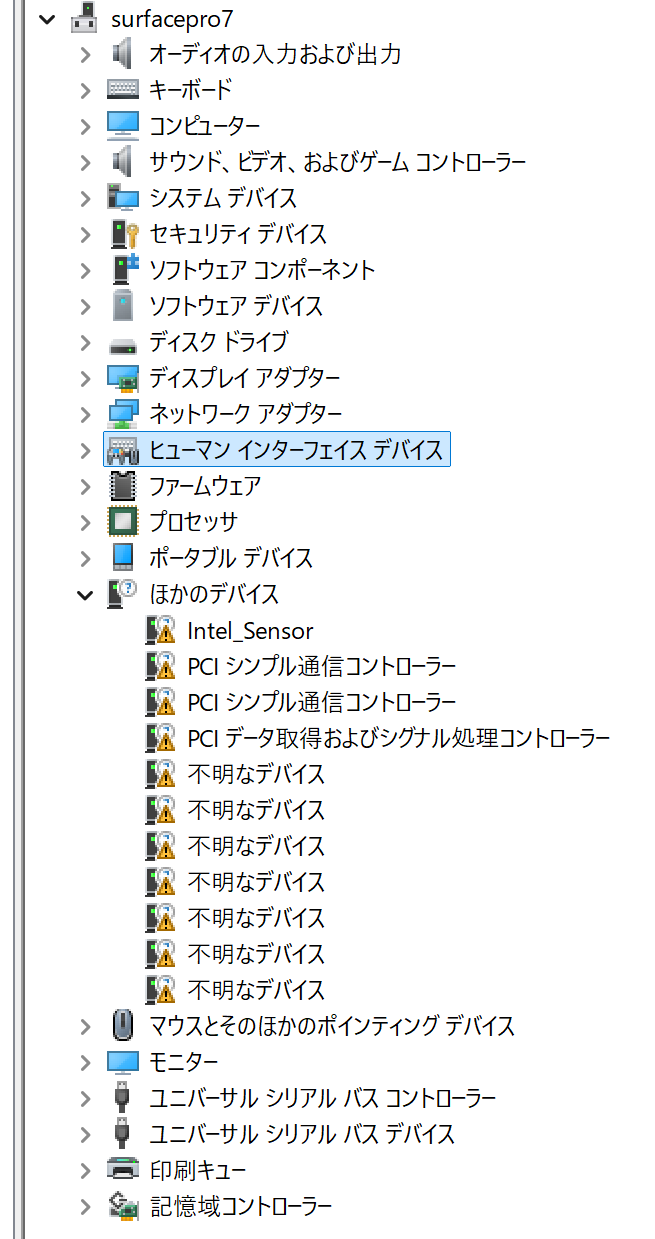
さて、Surface Pro 7を標準的なWindows 11 24H2メディアでインストールした直後は、下記のように認識していないデバイスがある。

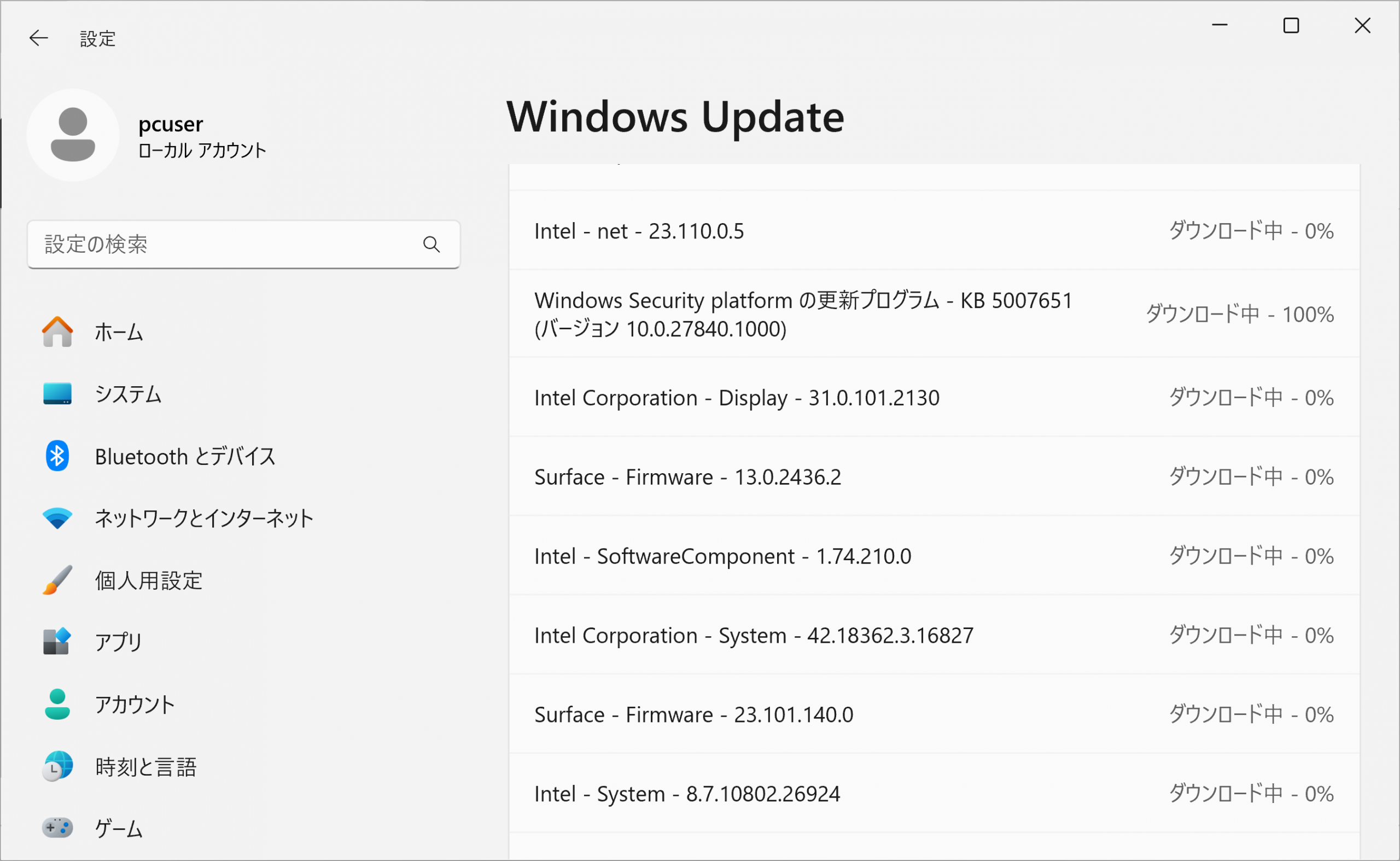
ただ、これらについては、下記のようにWindows Updateを実施すればすべて解消する

解消するのだが、再起動が3回必要だった。

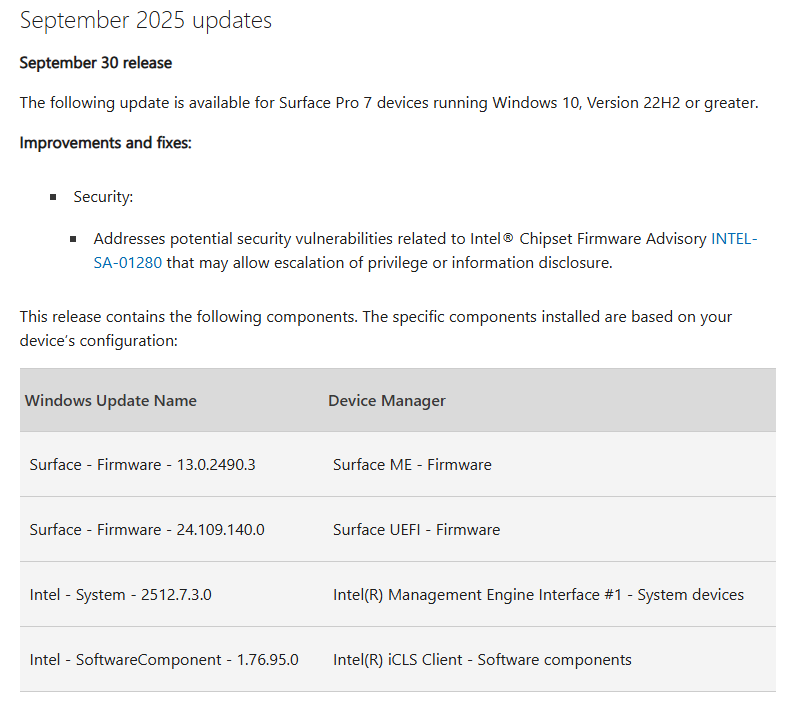
よく見たら上記のWindows Updateで適用されているSurface Firmwareのバージョンは2025/09/30付けで単体ダウンロードが可能になってるFirmwareと同じですね

回復メディアを使用しての再インストール手法

次に、Surface Pro 7の回復メディアを作成してWindows 11 24H2のインストールを行った。

この場合は、インストール直後ですべてのデバイスは認識しているものの、Windows Updateでのドライバ更新は同様にあり、2回ぐらい再起動が必要となった。

また、ディスプレイの拡大率が200%で設定されていた。(標準メディアだと150%)

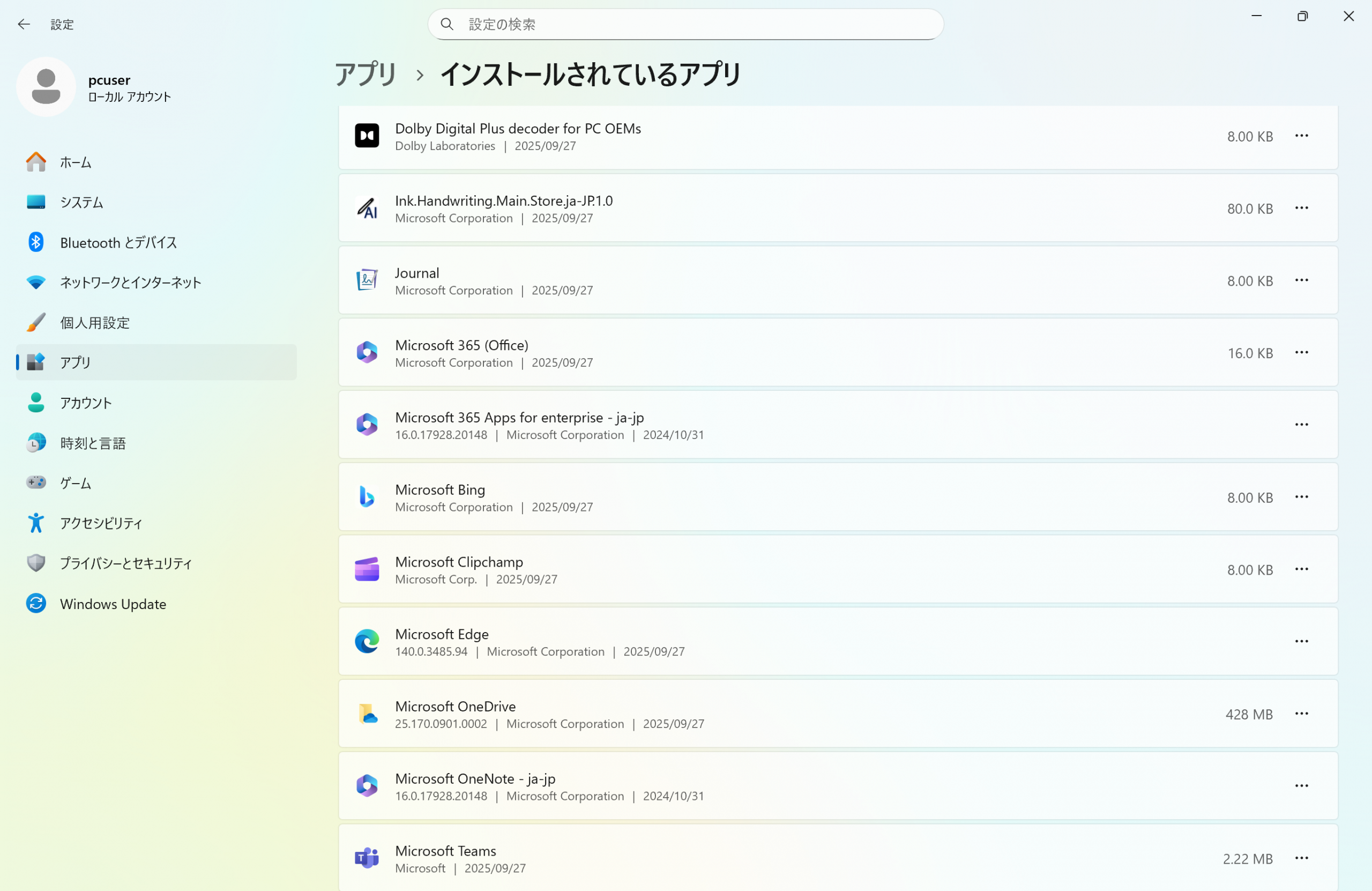
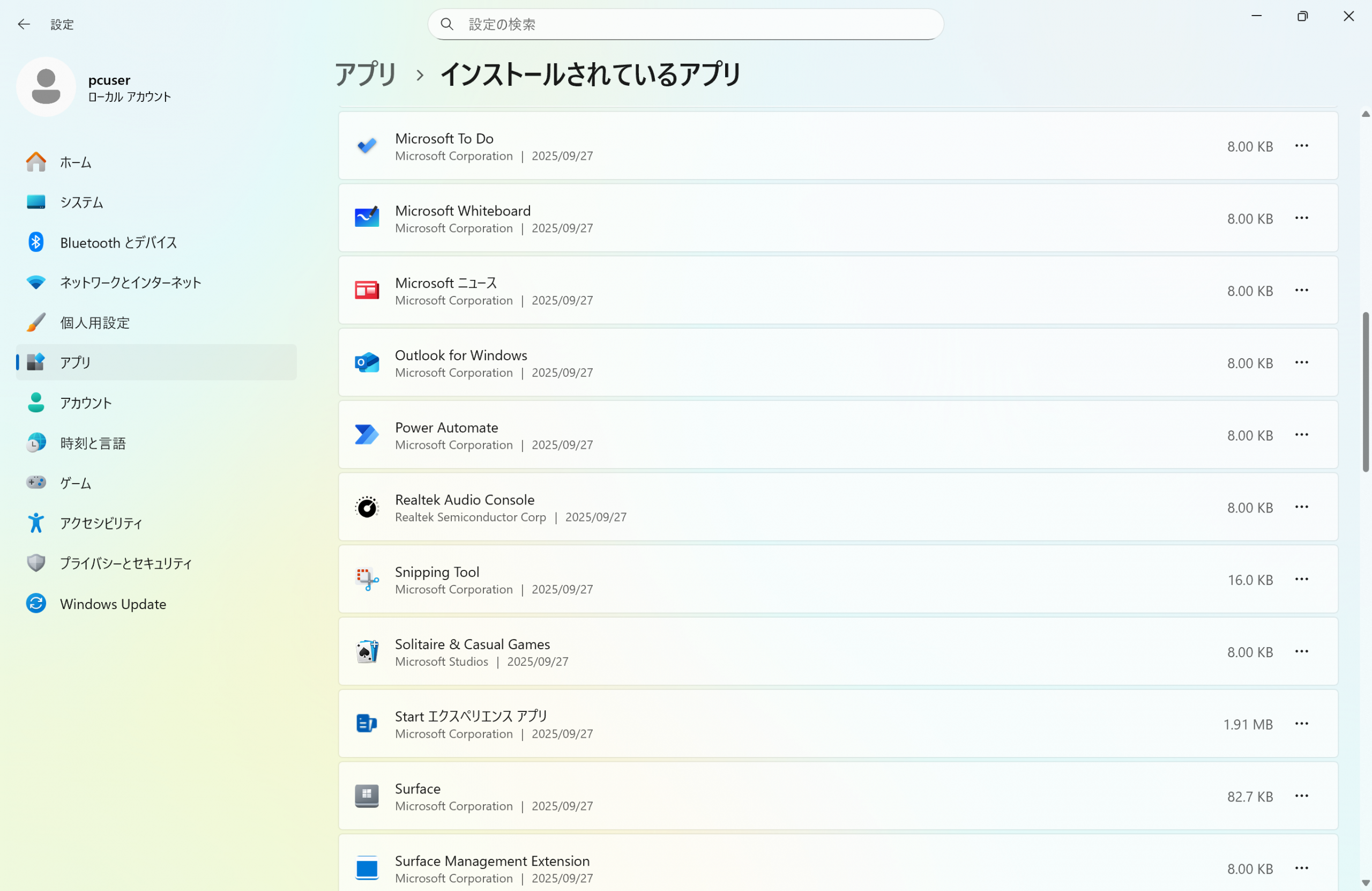
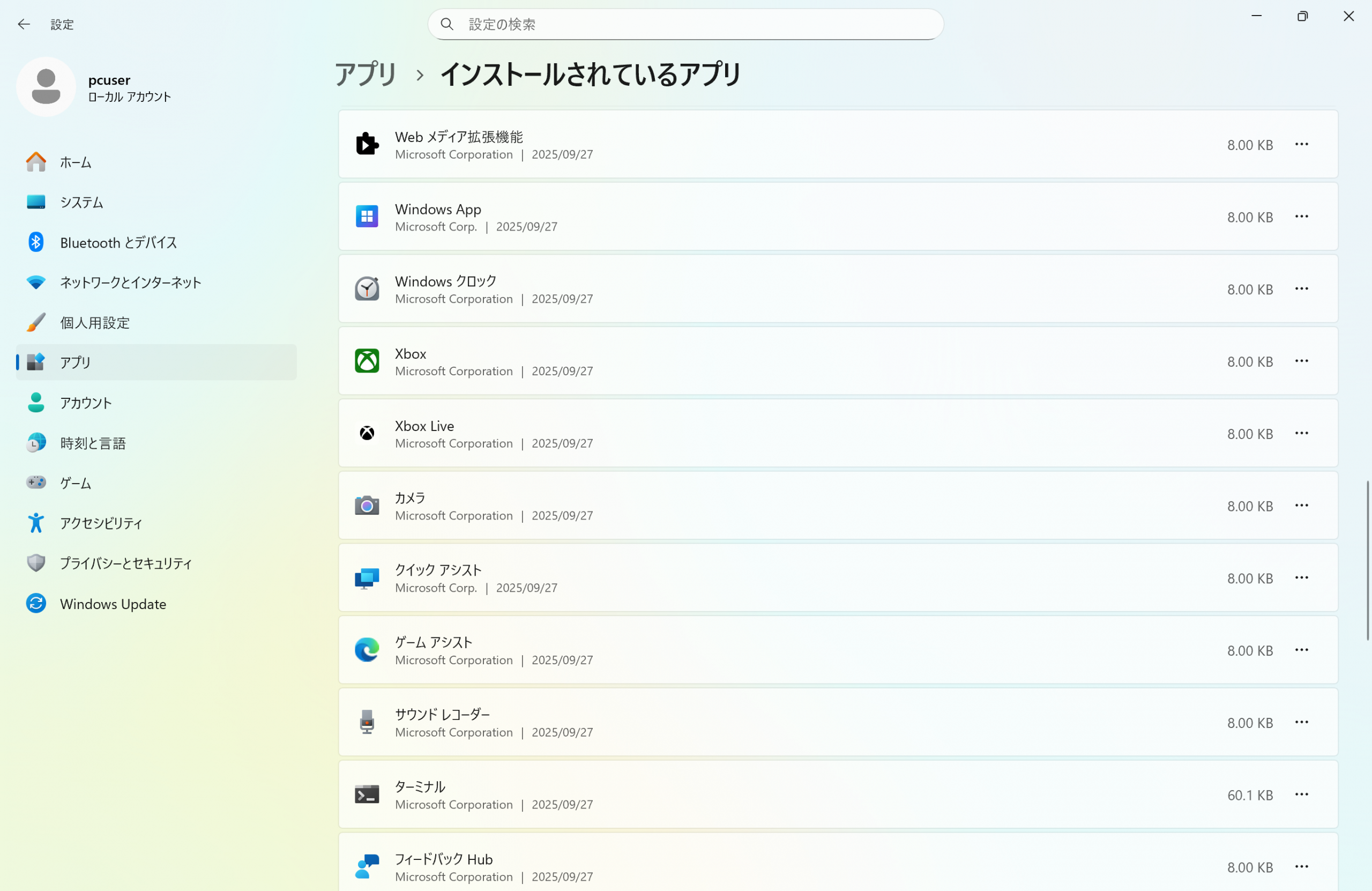
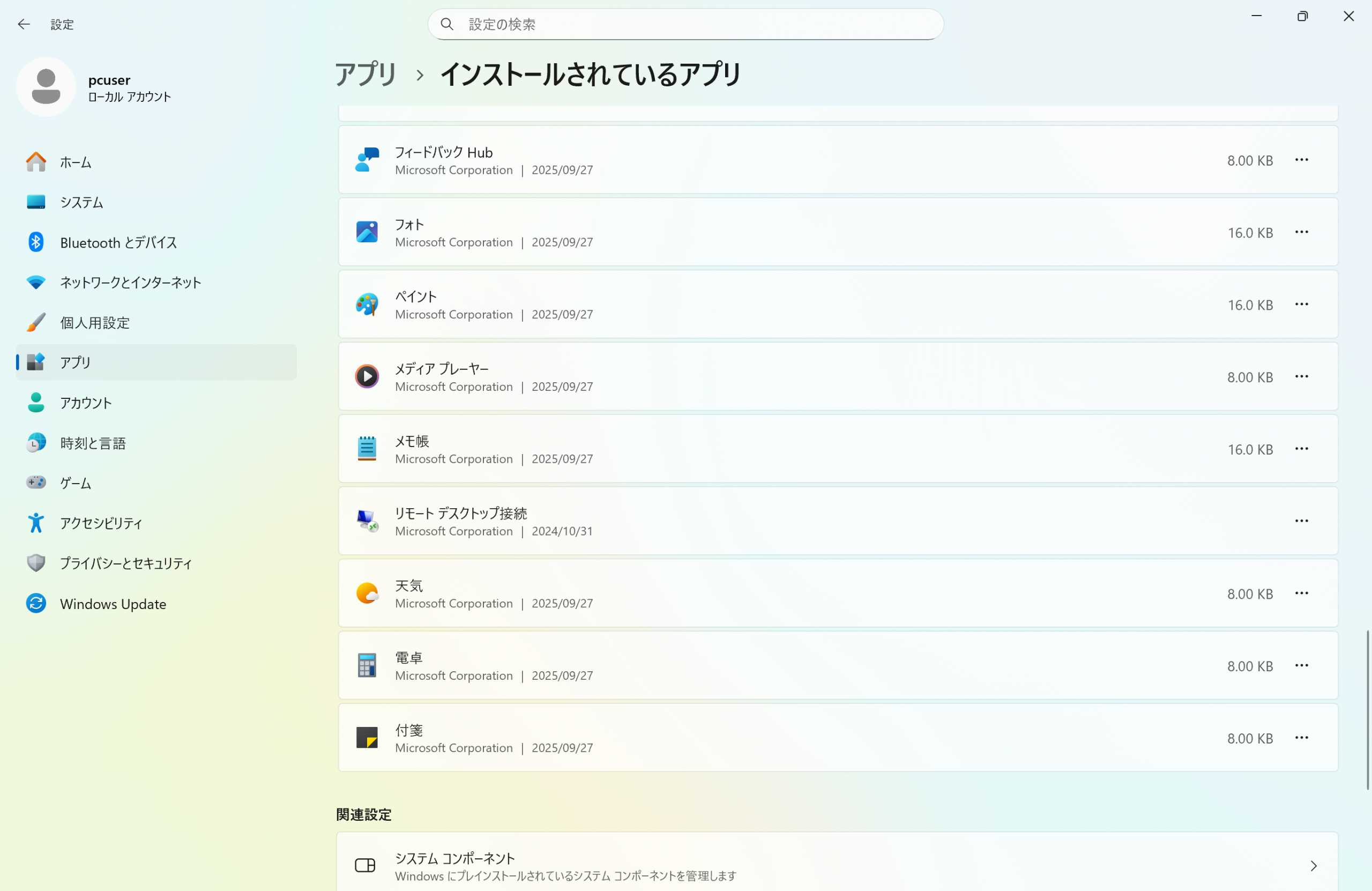
標準でインストールされているアプリが大分違っていた。

Lifebook U938/S に 32GBメモリを載せてみた

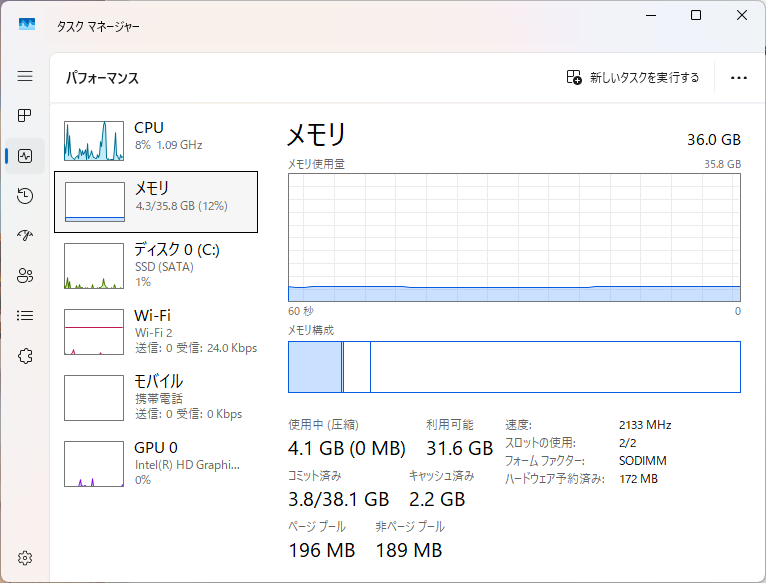
富士通 Lifebook U938/Sに32GBのメモリを載せてみたところ、オンボード4GBと合わせて36GBメモリ認識として使用できるようになった。

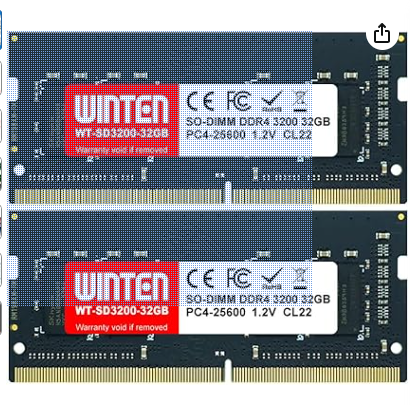
今回買ったのはWINTENのSO-DIMM DDR4 3200 32GBです

まあ2枚セットで買ったので、ついでにN95搭載のTRIGKEY にも載せてみて、N95の仕様上は最大メモリーサイズ16GBと書かれているのが突破できていることも確認したりした。

TRIGKEY MINI PC Key N (N95搭載)を買った

AmazonでTRIGKEYのミニPCが1万円を切ってる、というので買ってみた

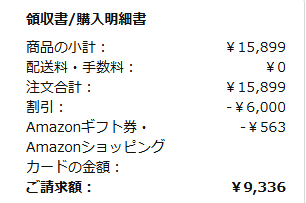
15899円になぜか6000円引きのクーポンがついてきて、1万円を切ってるというもの

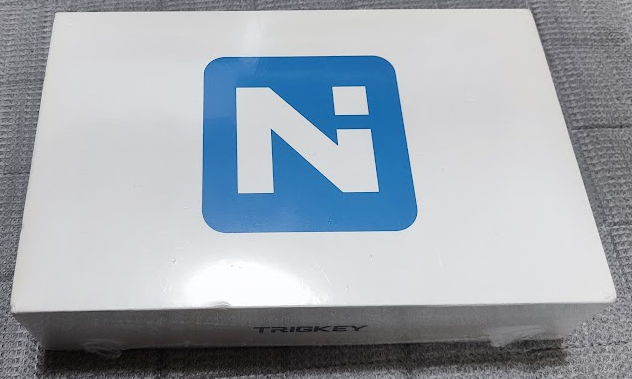
速やかに到着・・・

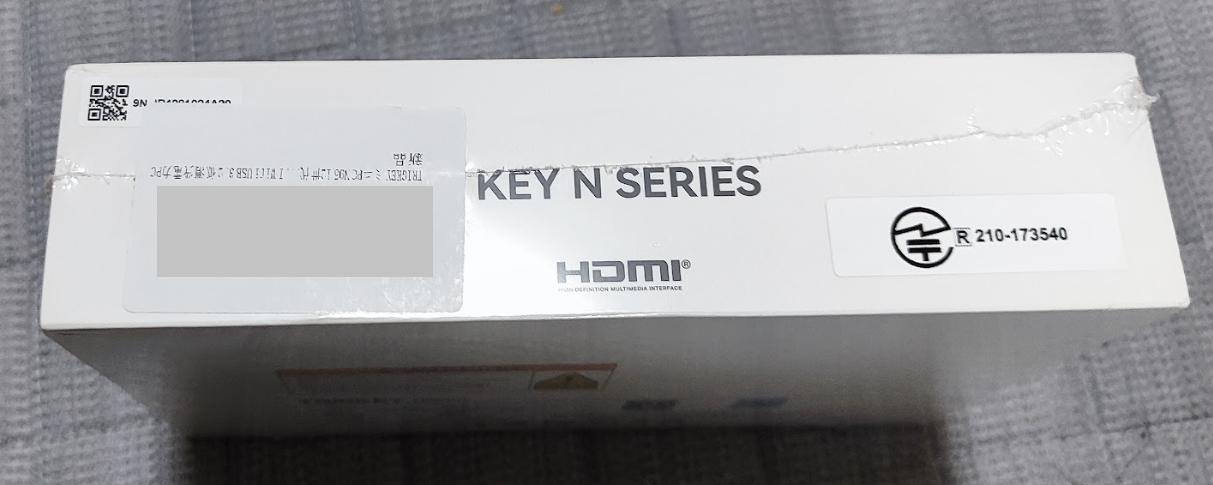
なぜか箱をくるんでいるビニールに対して技適 210-173540 というシールが貼れているという・・・

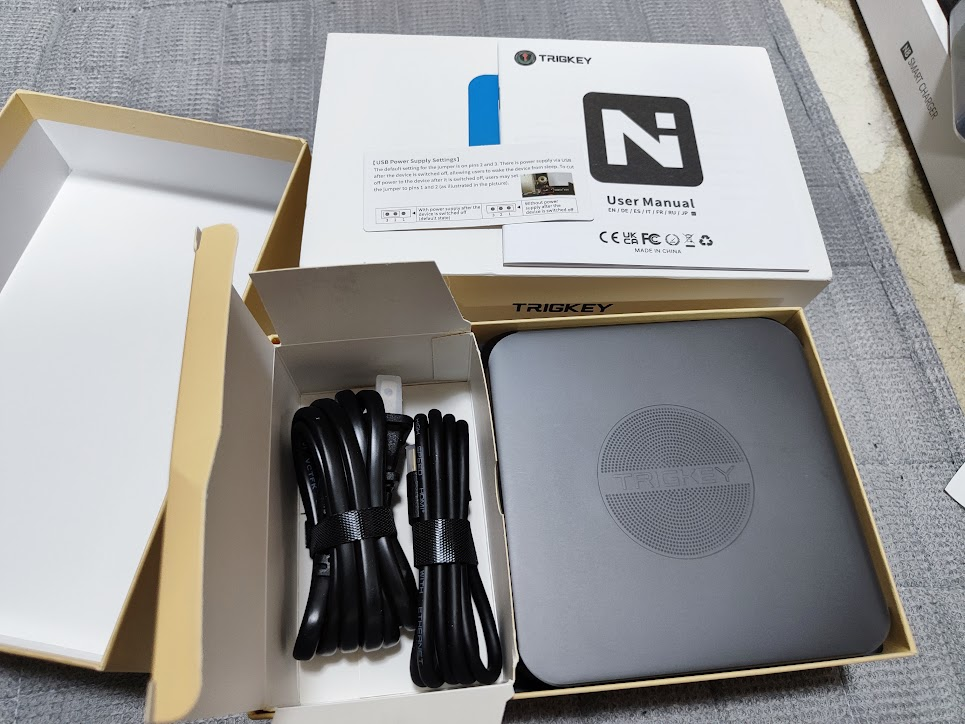
箱の中身はこんな感じ

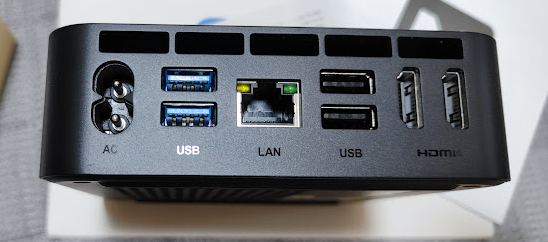
電源ユニット内蔵なので、謎のType-C形状電源とか不要でコンパクトに使える、というのがとても良いですね

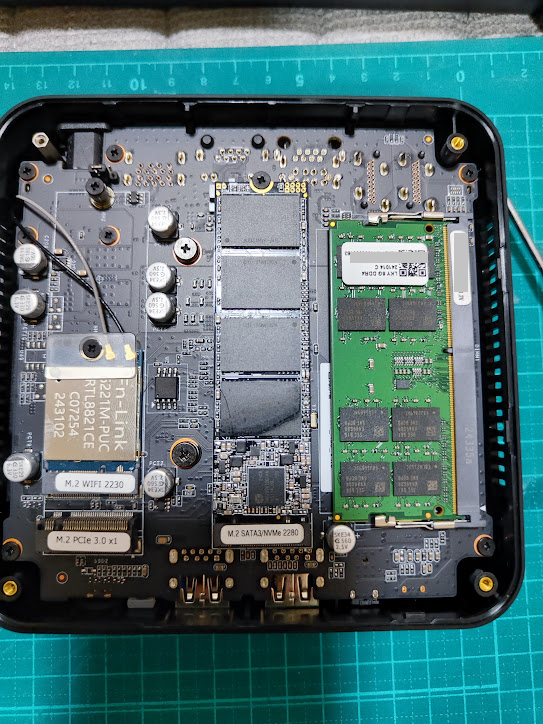
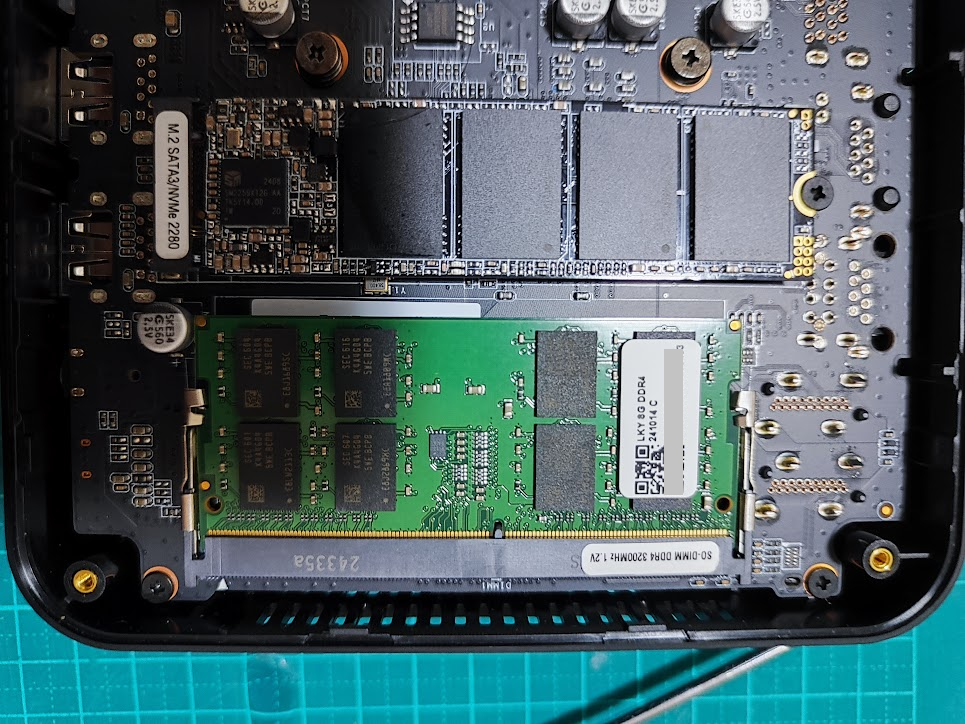
ついでに中身確認

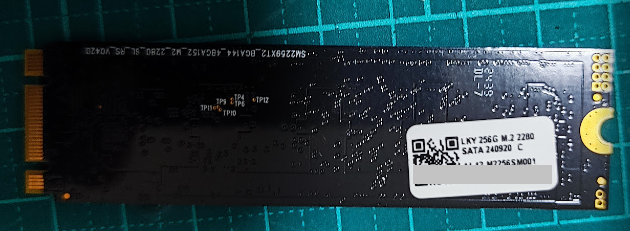
うーん・・・M.2 SATA SSD 256GBが黒いです。

フラッシュチップの記載が何も読めません

メモリにもかかれている「LKY」というのがメーカか何かなんですかね?

起動してみましょう

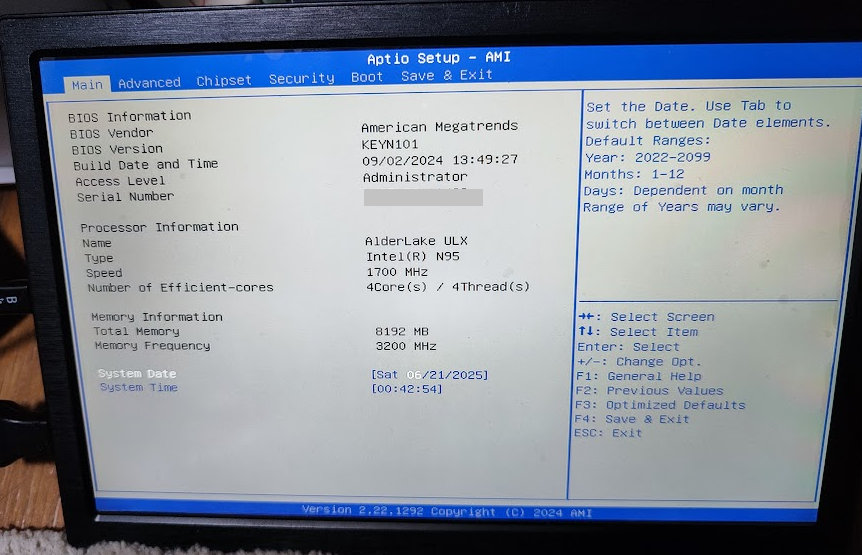
F2キーでUEFIに入れました。

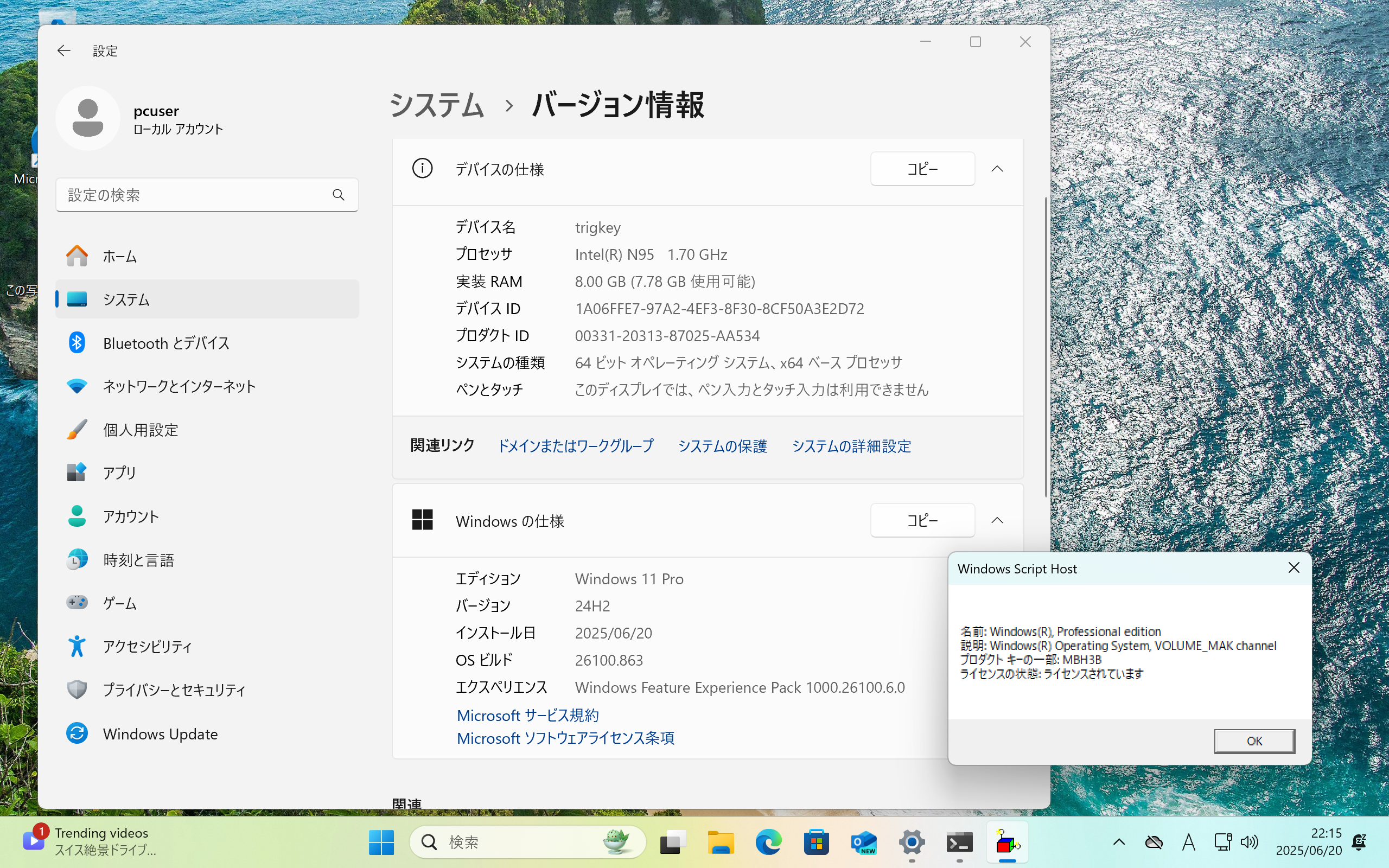
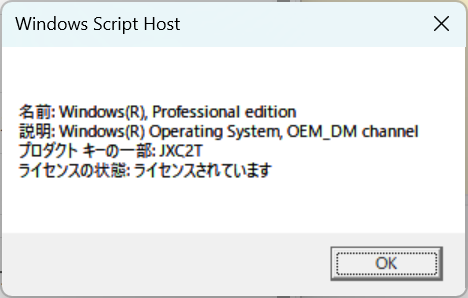
プレインストールのWindows 11 Proのセットアップを進めていって「slmgr /dli」を実行してWindowsのライセンス認識を確認してみます・・・

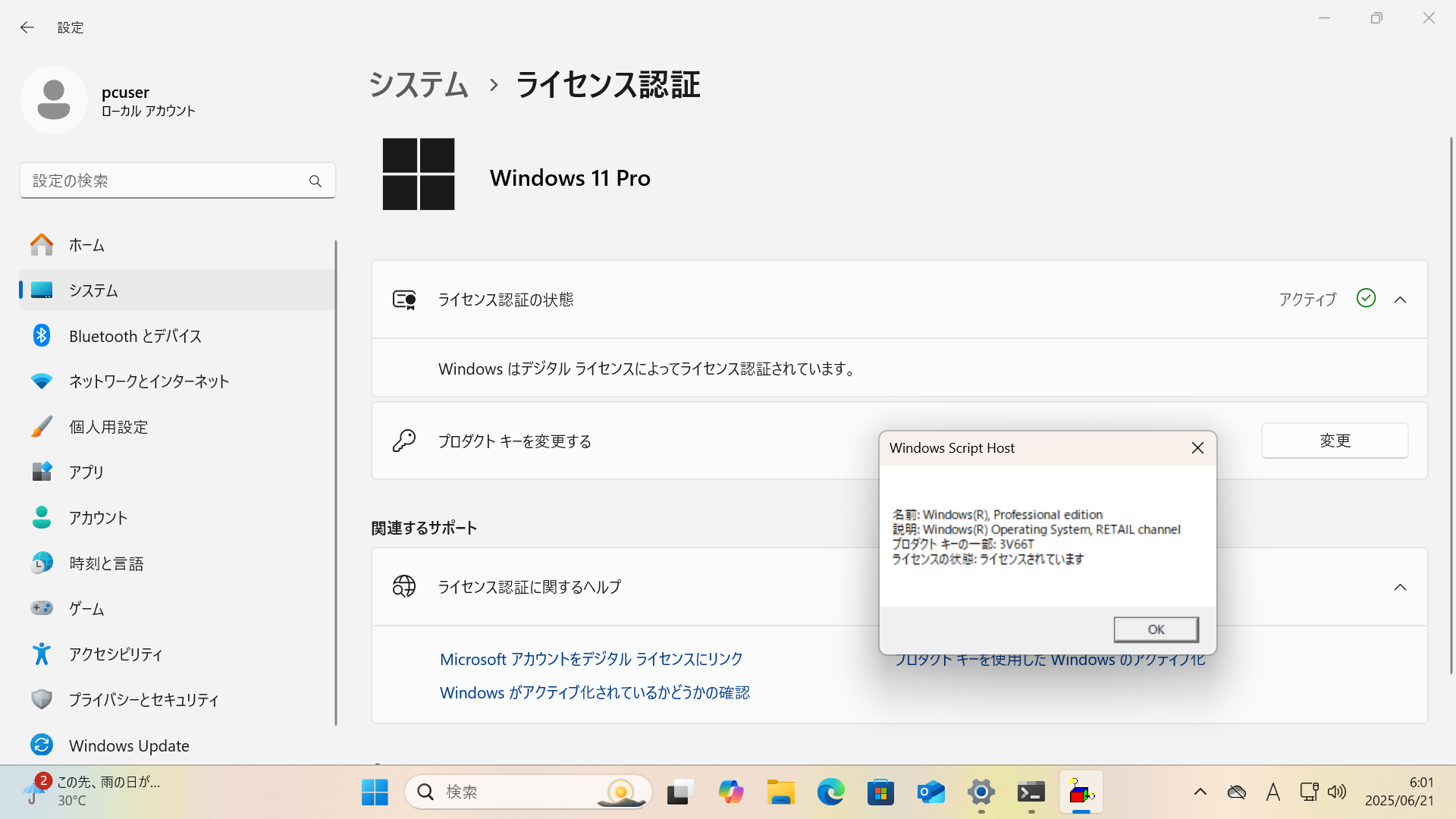
ライセンスは以下のようにVOLUME_MAKでした

なので、Amazon経由で正式なライセンスをくれ、とメッセージを送ったところ4営業日でライセンスが発行され、適用したところ OEM_DM として認識されることを確認しました。

で・・・実は、なかなかライセンスが来なかったので、ライセンスが届く前にWindowsの再インストールを行ってみたところ予想外の事態が・・・

インストール時にライセンスは自動認識されないので、Windows 11 Proを手動で選択してインストールを終わらせてみたところ、すでにRETAILで認識されていたという・・・

うーん・・・どういう状態なんですかねぇ・・・これ

とりあえずはWindows 11 Pro ライセンスがついてきて1万円を切っていた、というのは変わらないですね。

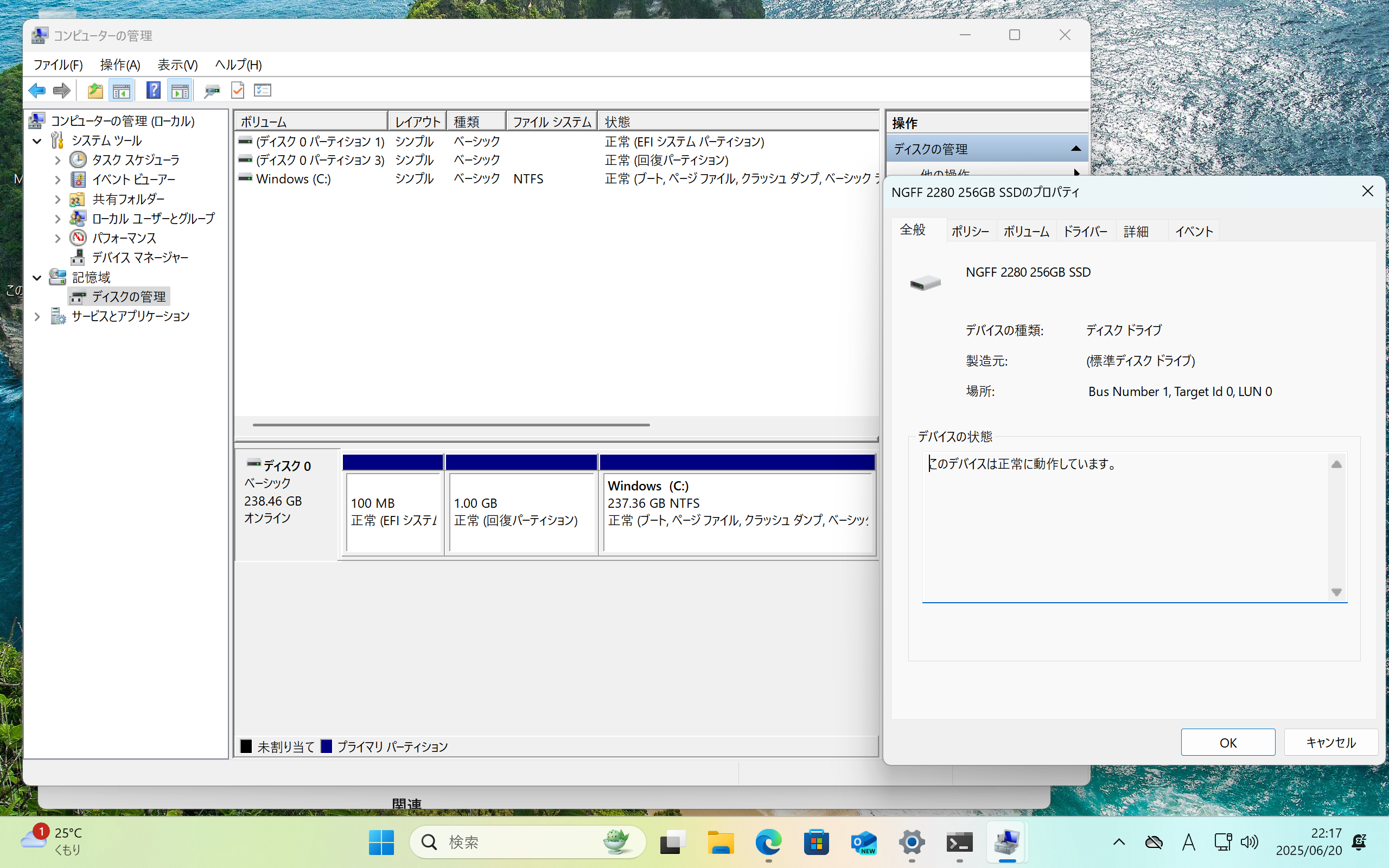
謎の真っ黒M.2 SATA SSDを確認

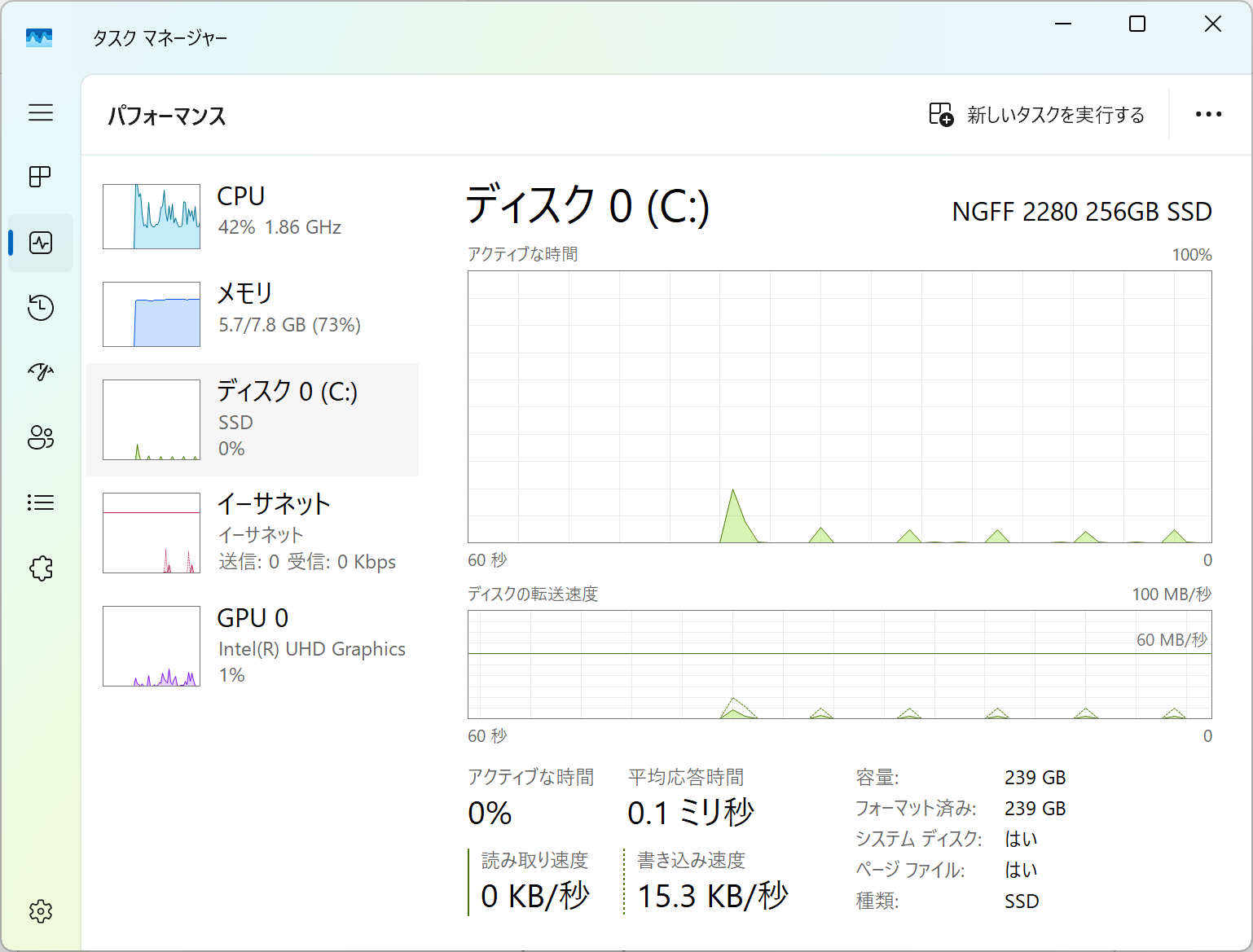
メーカー名なしで「NGFF 2280 256GB SSD」と認識のもの、というのは驚きです。

(NGFF 2280 は 物理的な形状のことを指している単語です)

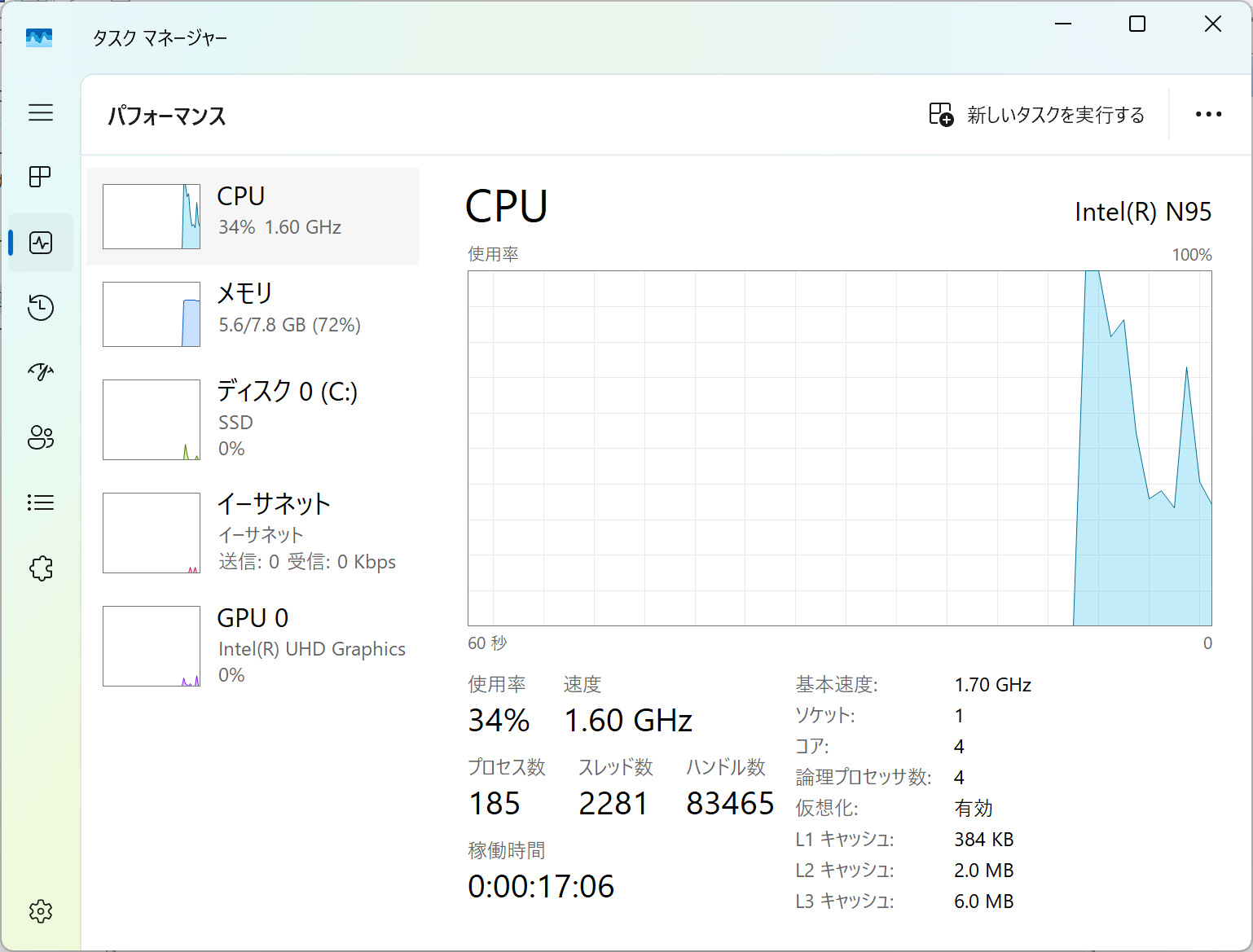
タスクマネージャー上の認識を確認。ちゃんとIntel N95で認識されている、と

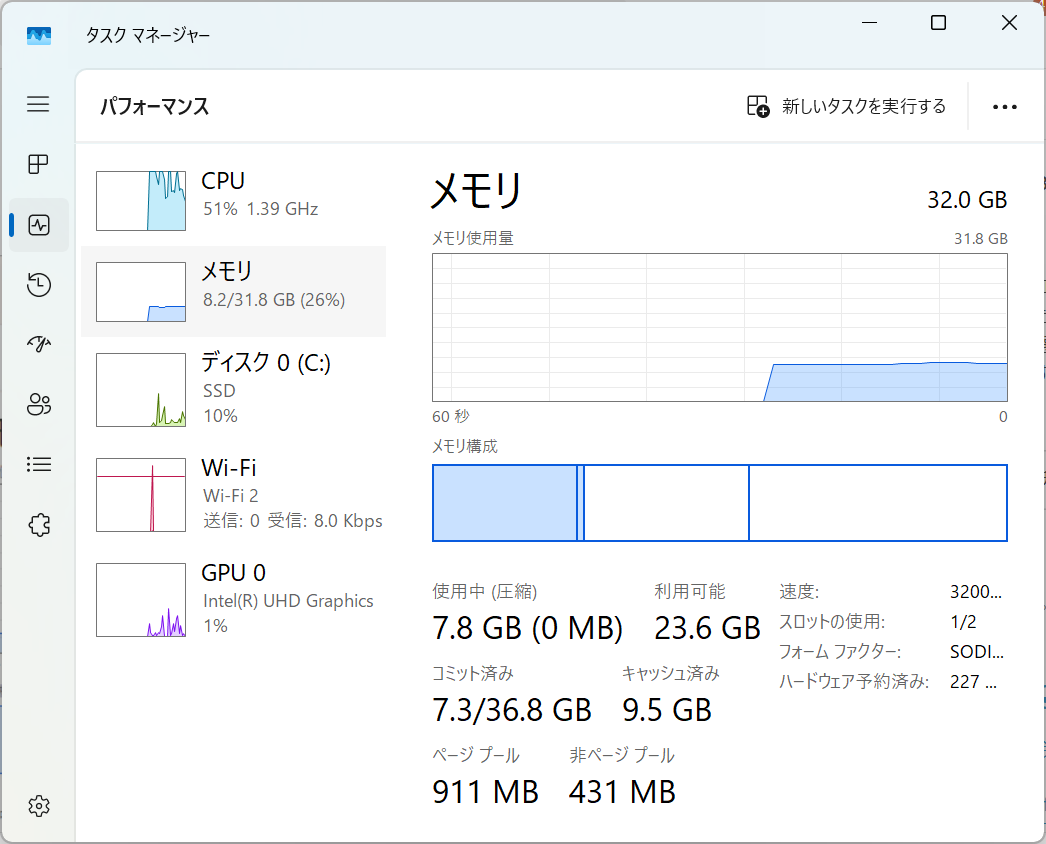
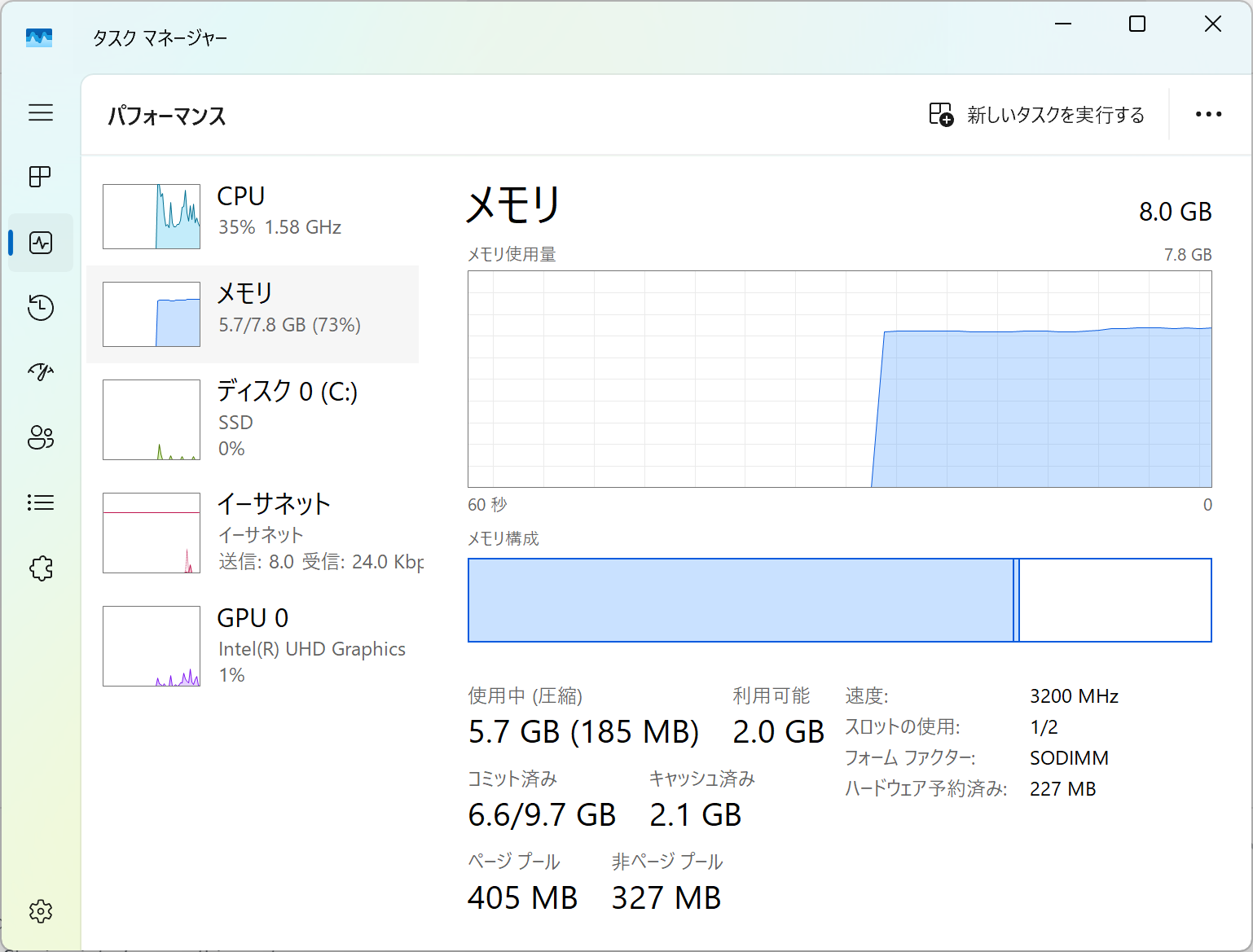
メモリはSO-DIMM DDR4 3200の8GBでした。なお、後述しますが32GBメモリが動作することも確認しました。

ディスクはメーカ、モデル名不詳のNGFF 2280 256GB SSD…まあ、256GBなので捨てちゃいましょう

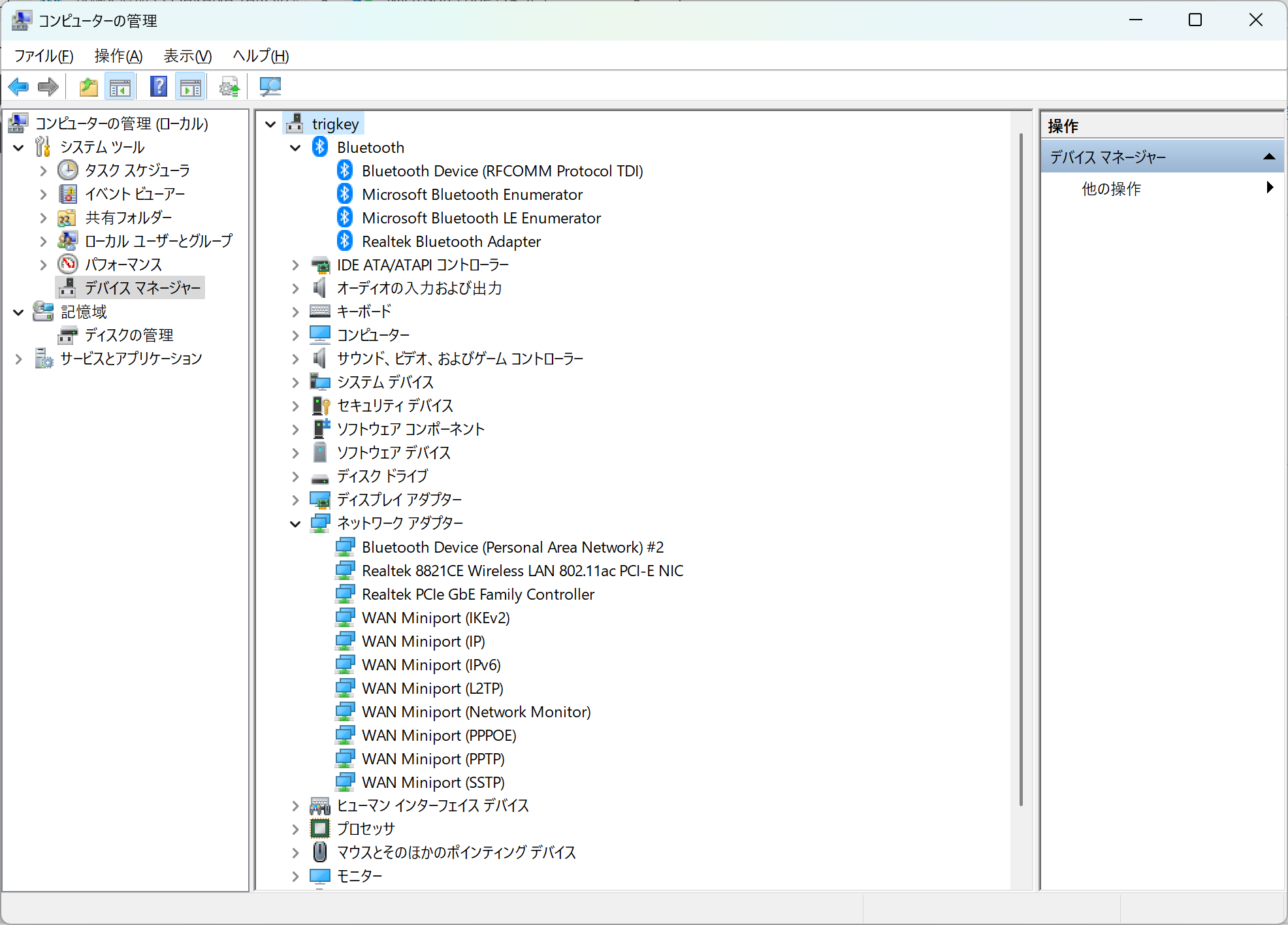
プレインストールのWindows 11 Proのドライバ認識を確認・・・もちろん未認識はなし。

プレインストールソフトについて

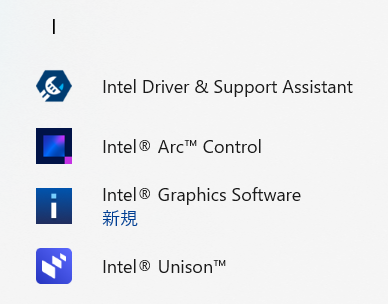
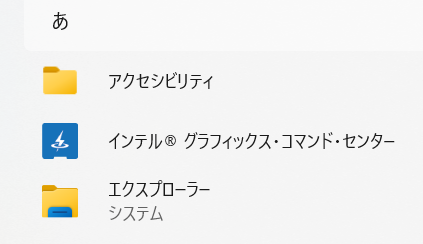
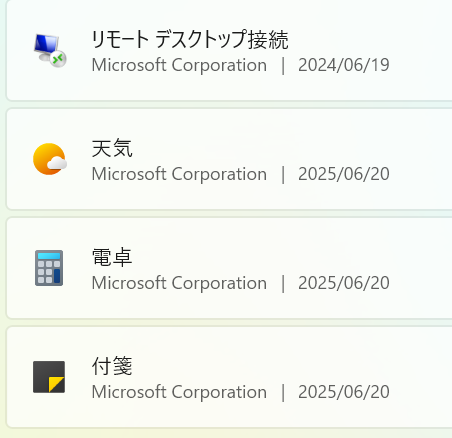
標準でインストールされているプログラムをスタートメニューで確認すると、Intel関連がいくつか登録されていた。

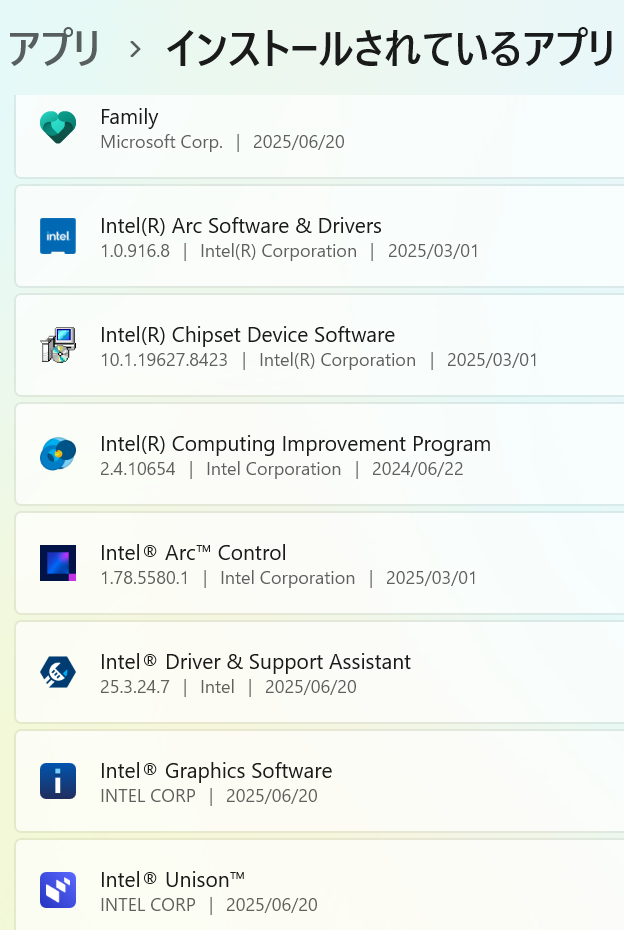
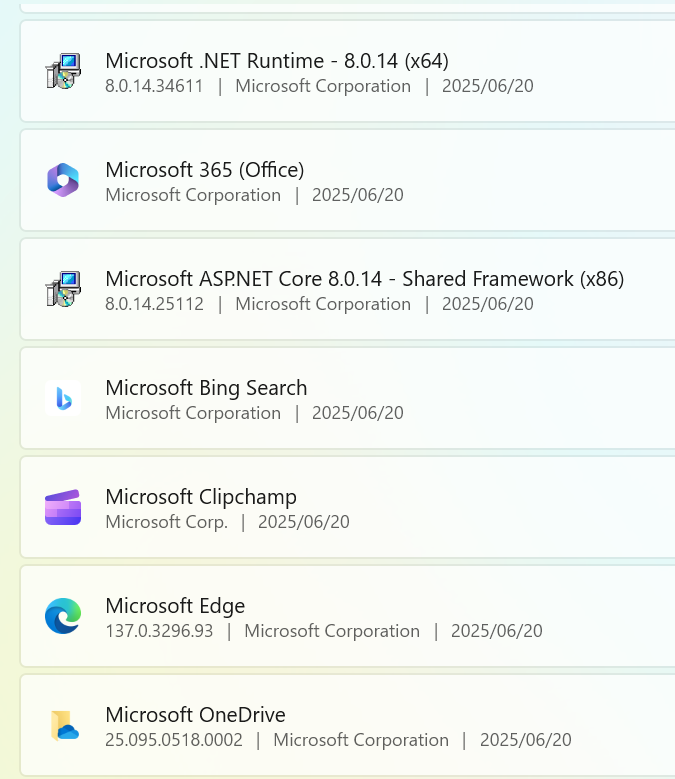
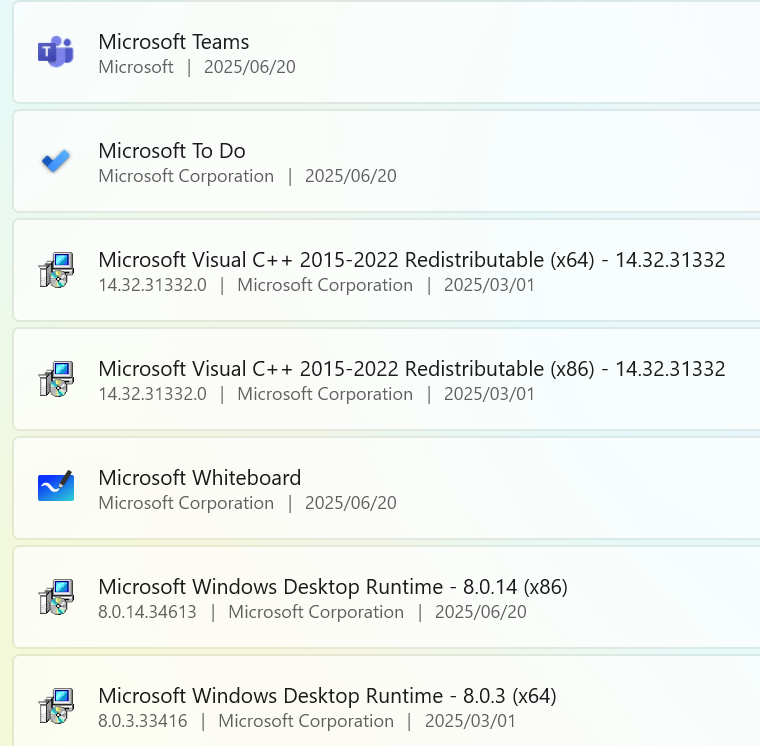
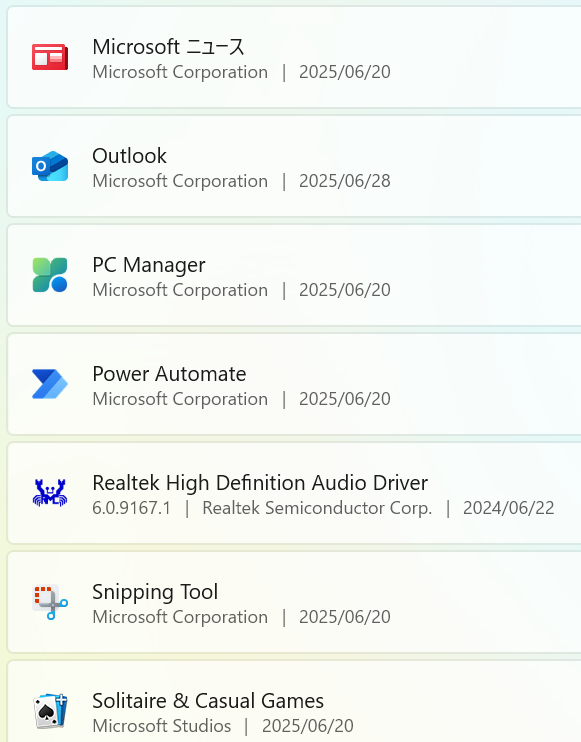
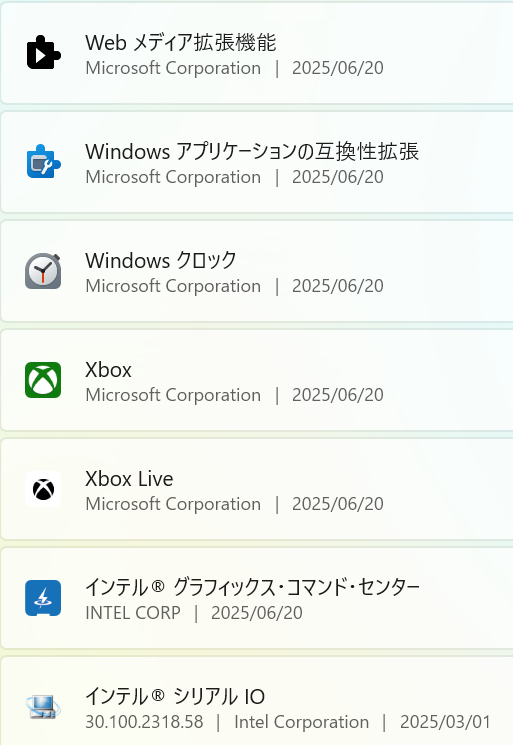
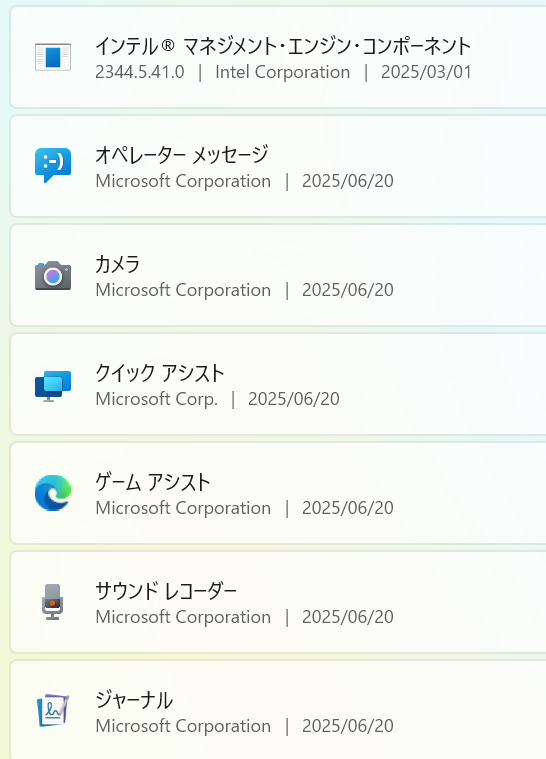
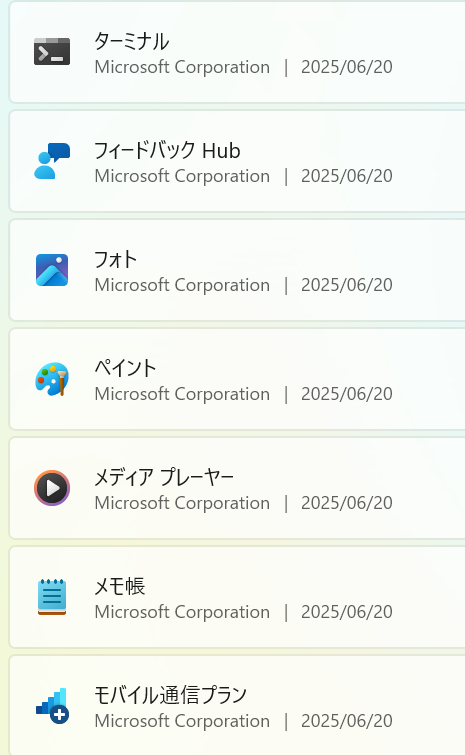
次にインストールされているアプリ一覧を確認

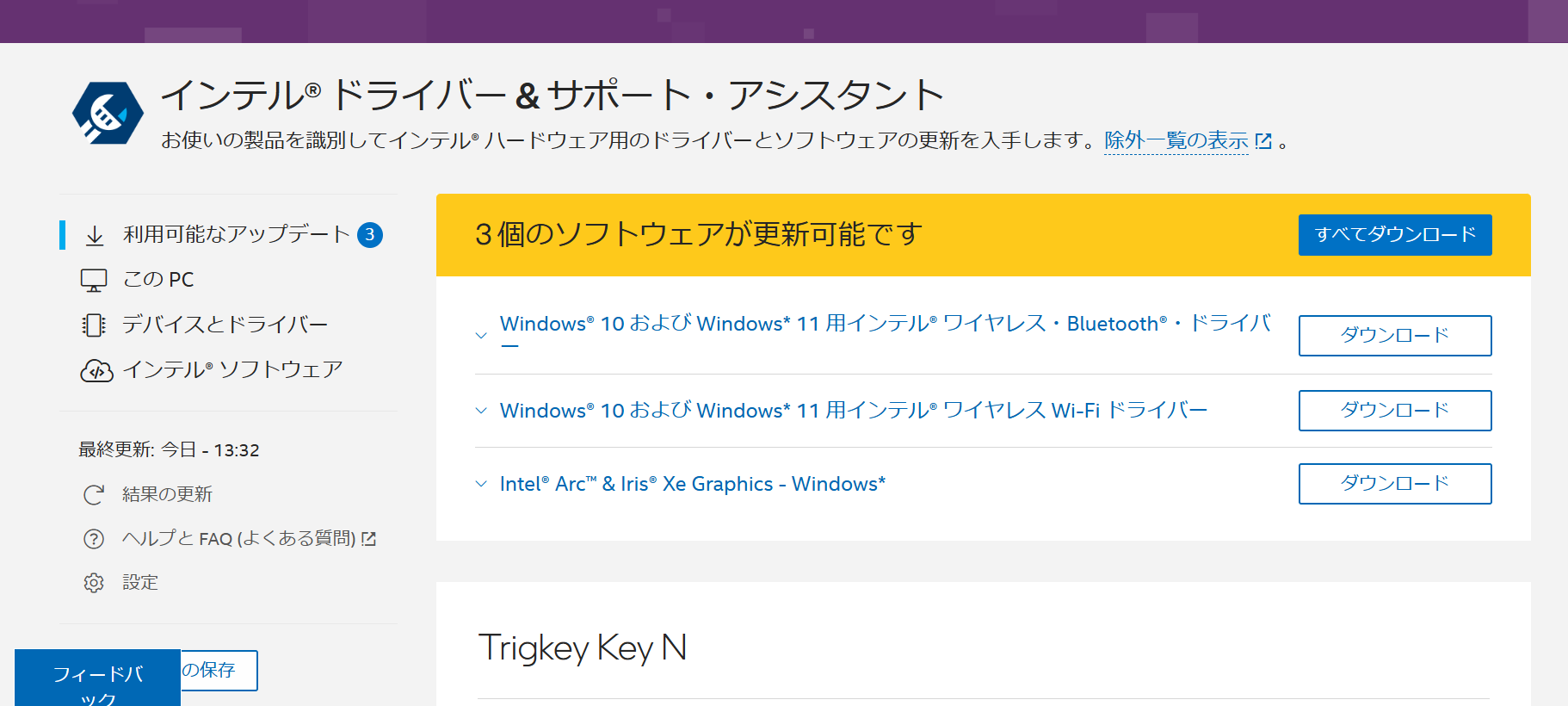
このうち「Intel Driver and Support Assistant」がドライバの更新があると教えてくれたので、実行してみるとブラウザが開いた

開いたURLはこれ : インテル® ドライバー & サポート・アシスタント

アップデートの詳細説明は下記のURL3つ

Windows® 10 および Windows* 11 用インテル® ワイヤレス Wi-Fi ドライバー

Windows® 10 および Windows* 11 用インテル® ワイヤレス・Bluetooth®・ドライバー

Intel® Arc™ & Iris® Xe Graphics – Windows*

Window 11 再インストール実施

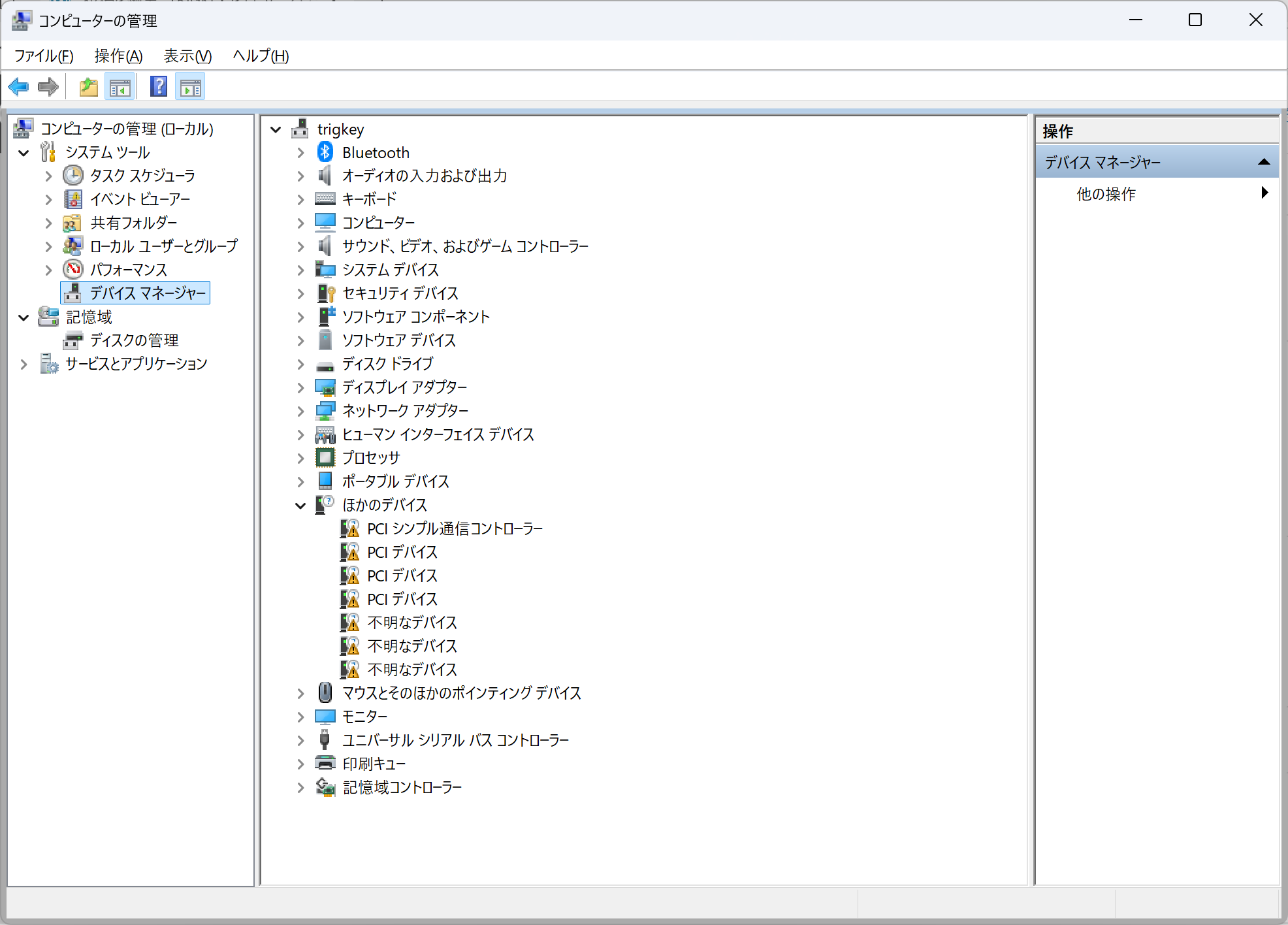
SSDを別のものに交換してWindows 11 Pro を再インストールしてみたところ、標準では一部デバイスが認識していない。

まずは認識していないものを確認しつつドライバを適用

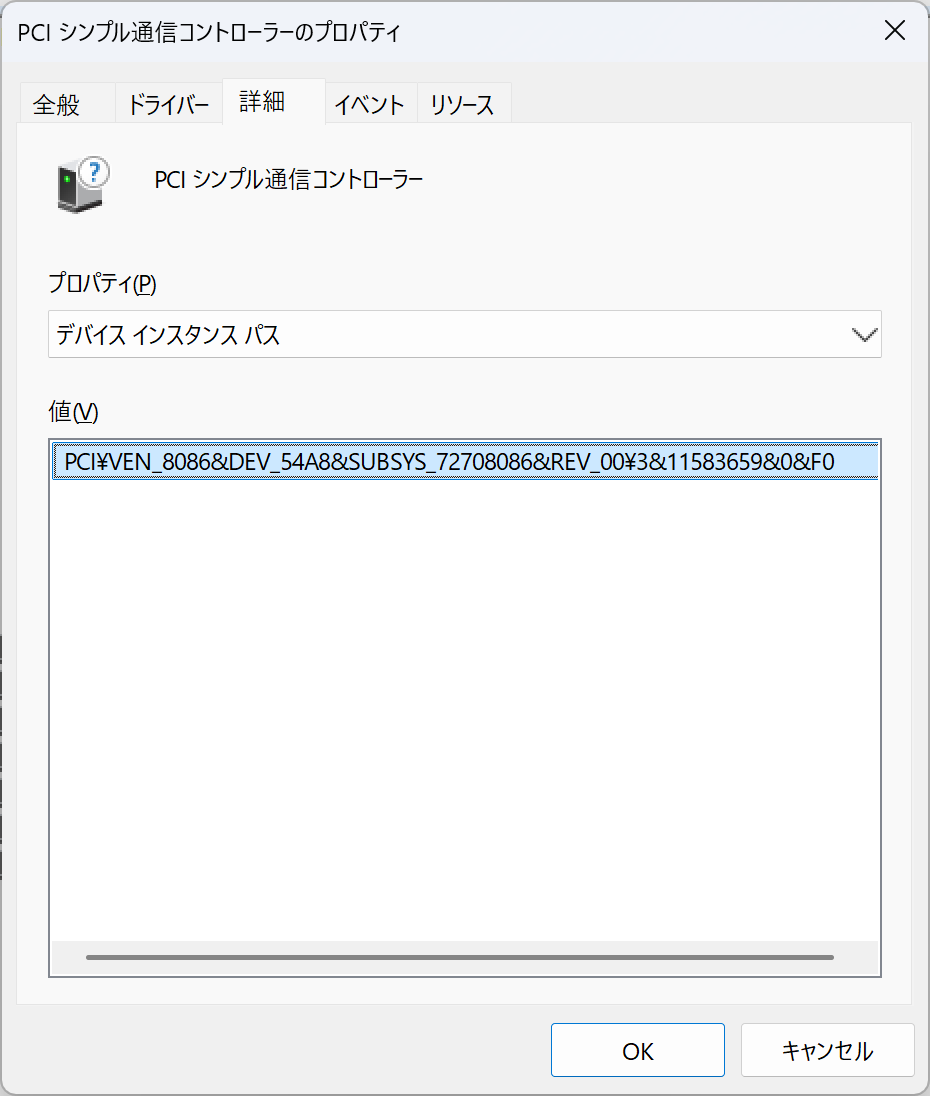
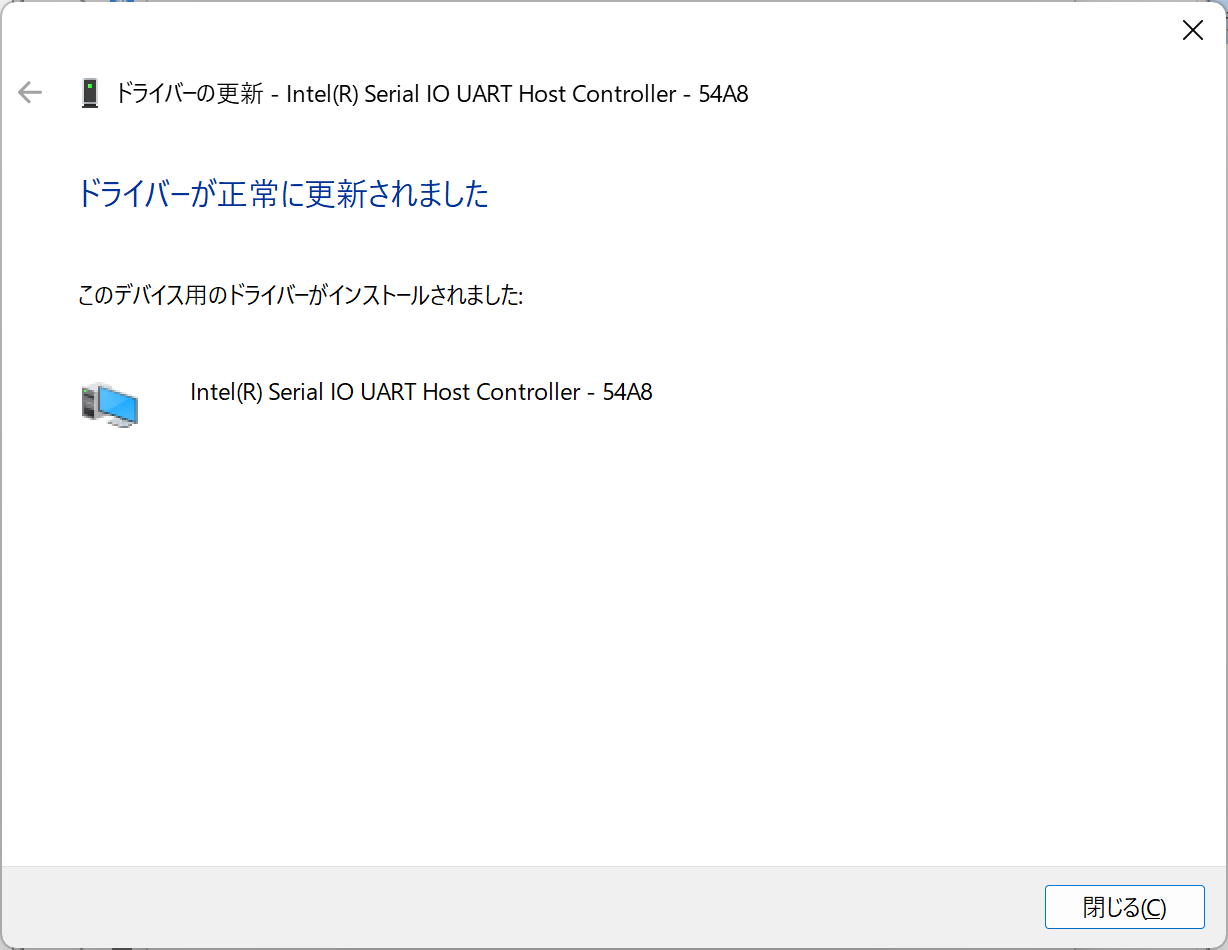
PCI シンプル通信コントローラーPCI\VEN_8086&DEV_54A8&SUBSYS_72708086&REV_00\3&11583659&0&F0

Microsoft Update カタログからドライバ適用

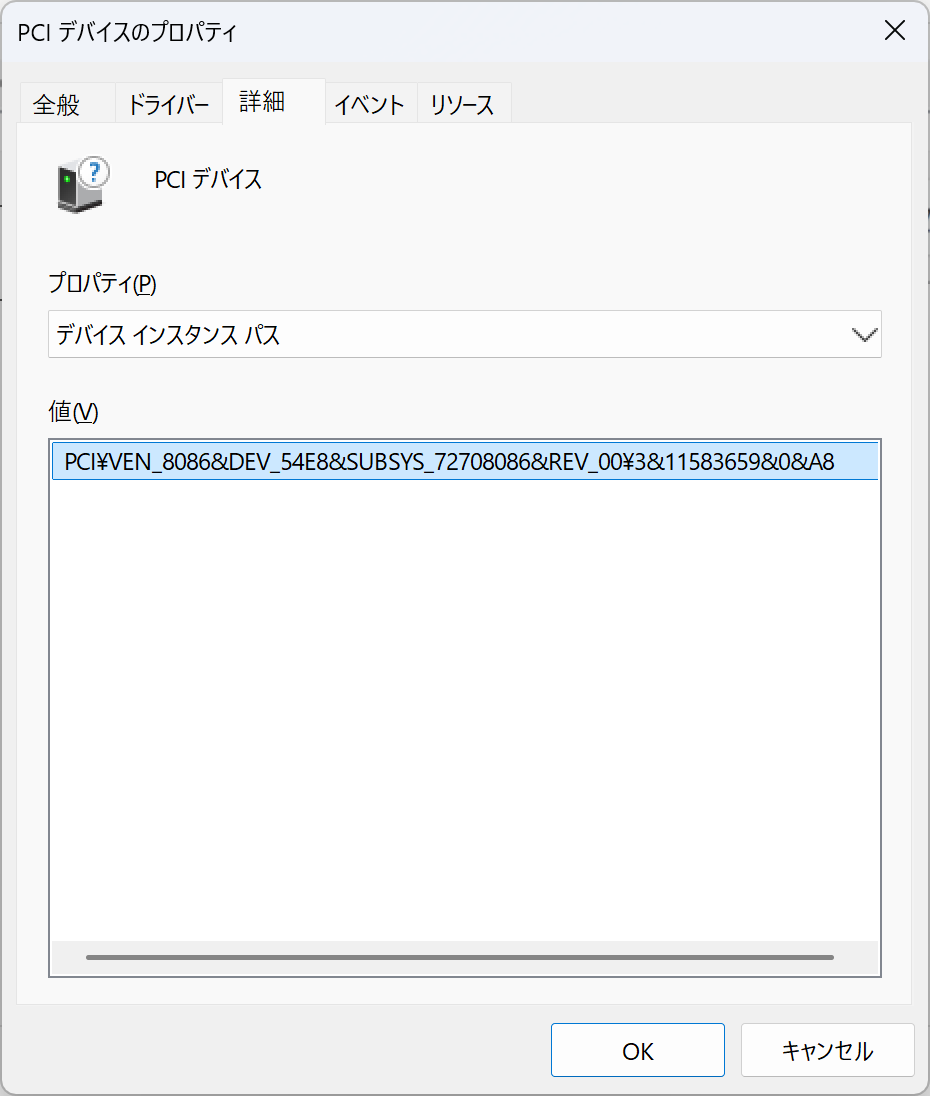
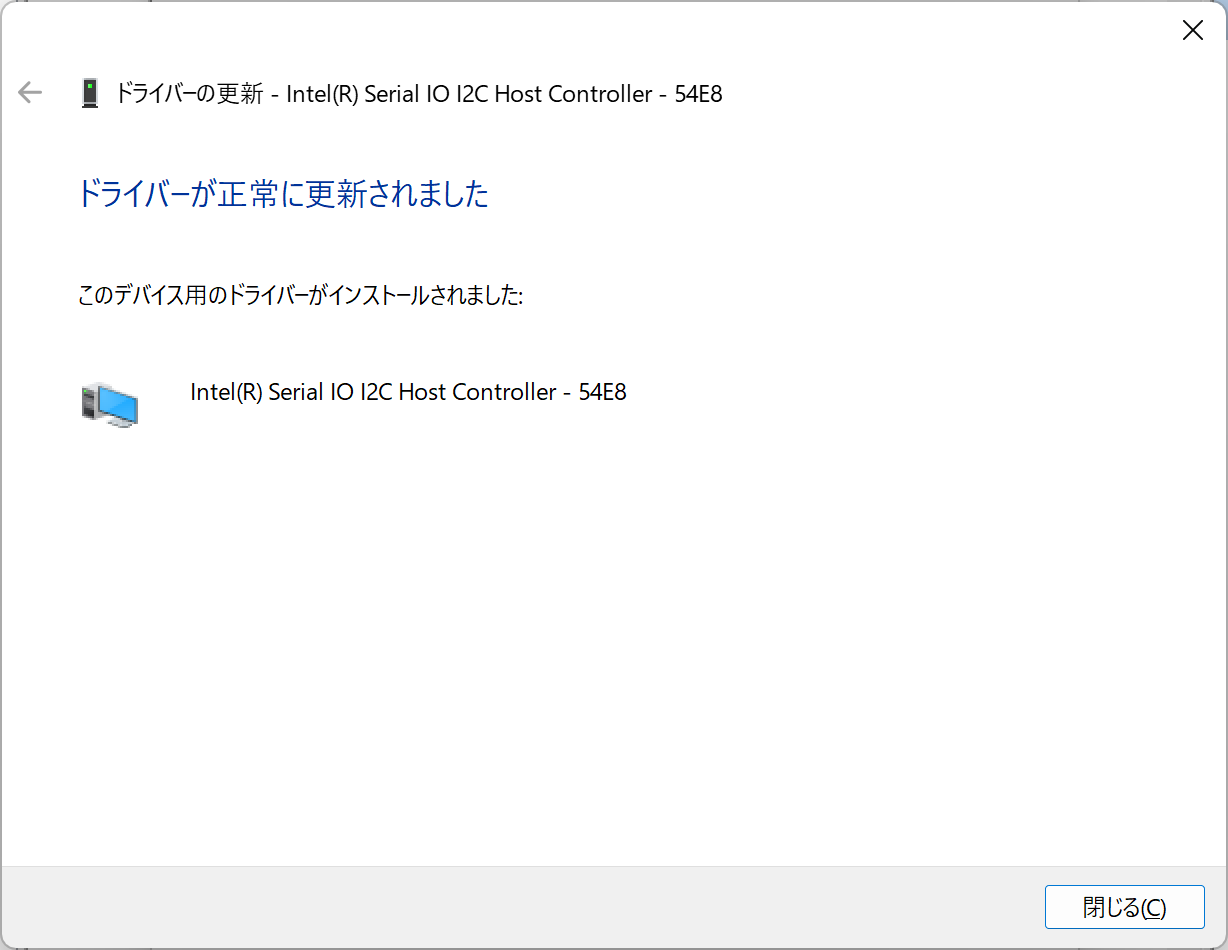
PCI デバイス
PCI\VEN_8086&DEV_54E8&SUBSYS_72708086&REV_00\3&11583659&0&A8

Microsoft Update カタログ からドライバ適用

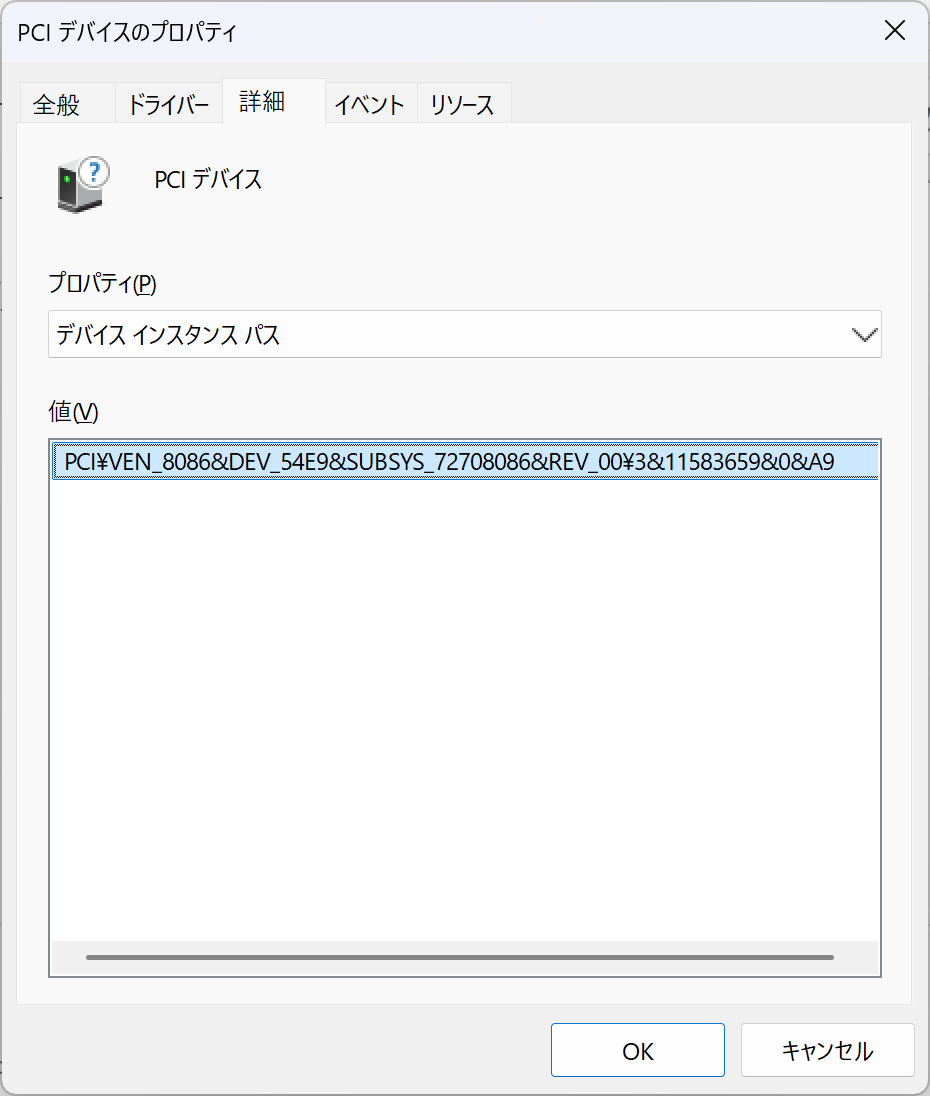
PCI デバイス
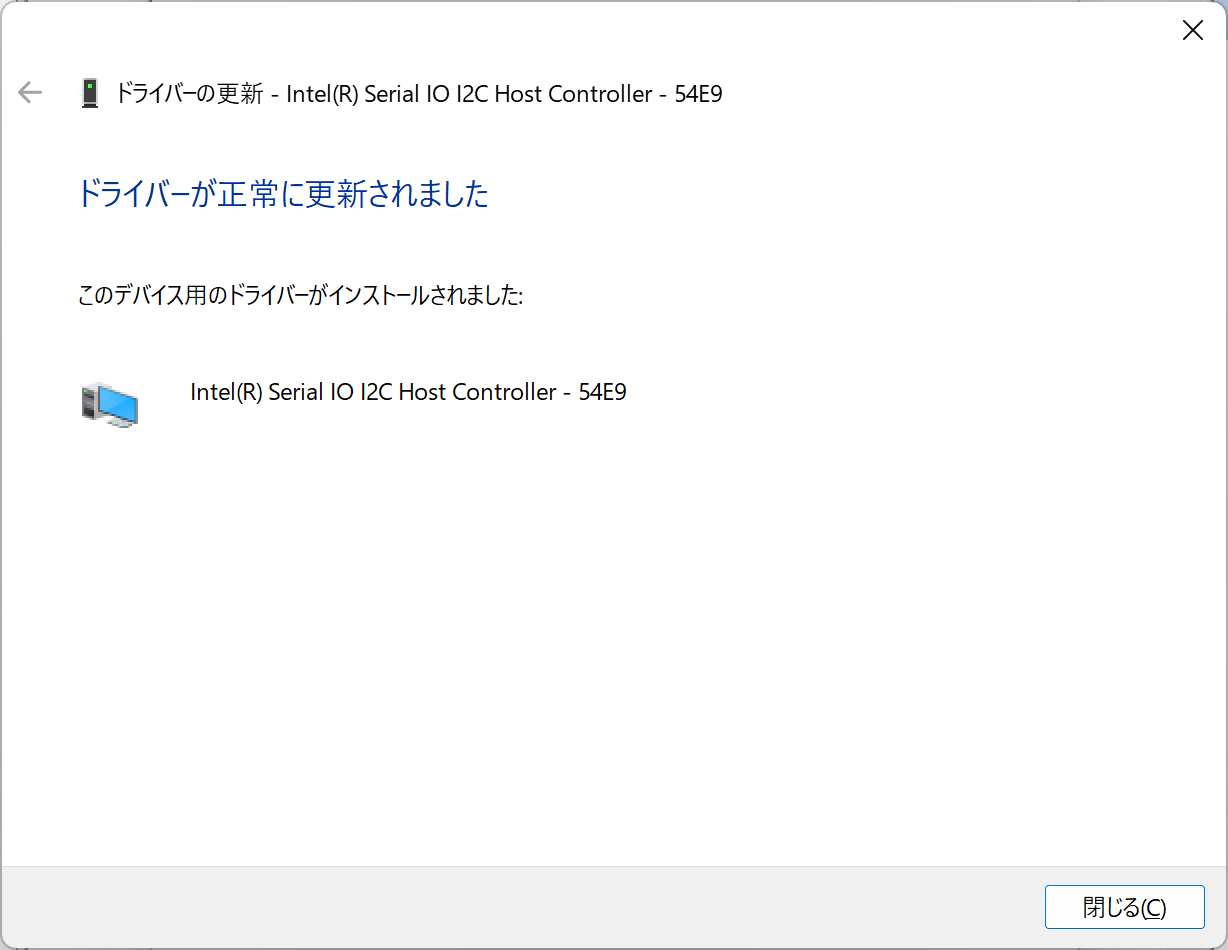
PCI\VEN_8086&DEV_54E9&SUBSYS_72708086&REV_00\3&11583659&0&A9

Microsoft Update カタログのドライバ適用

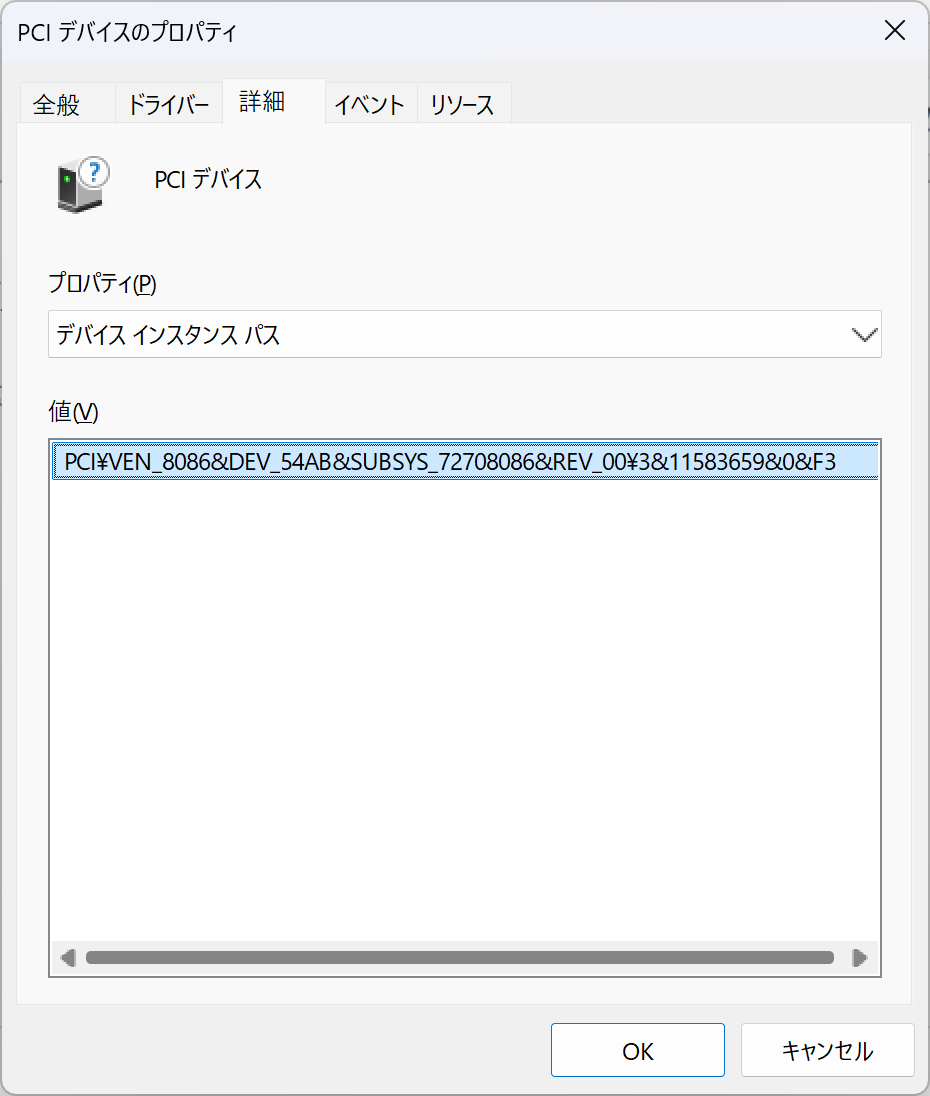
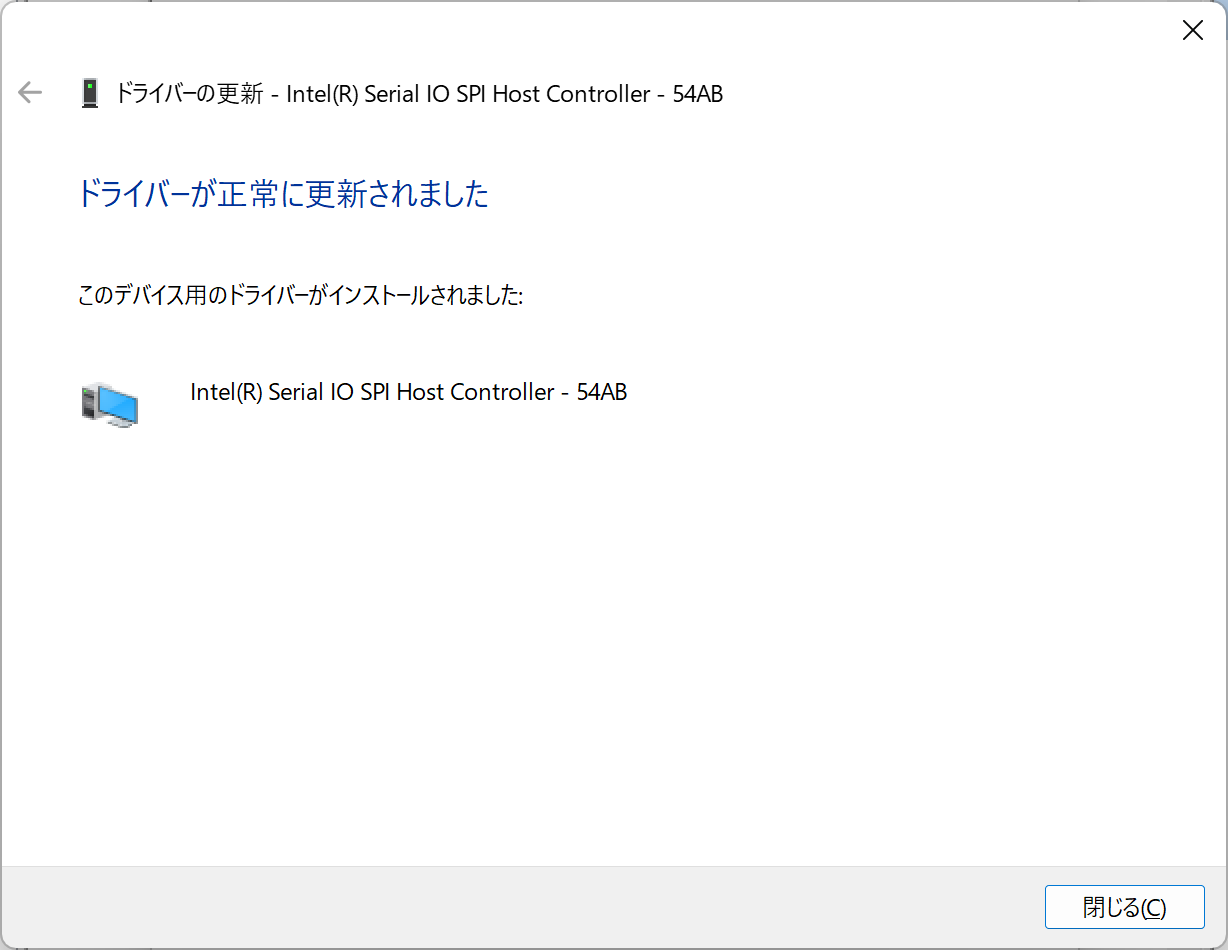
PCI デバイス
PCI\VEN_8086&DEV_54AB&SUBSYS_72708086&REV_00\3&11583659&0&F3

Microsoft Update カタログ

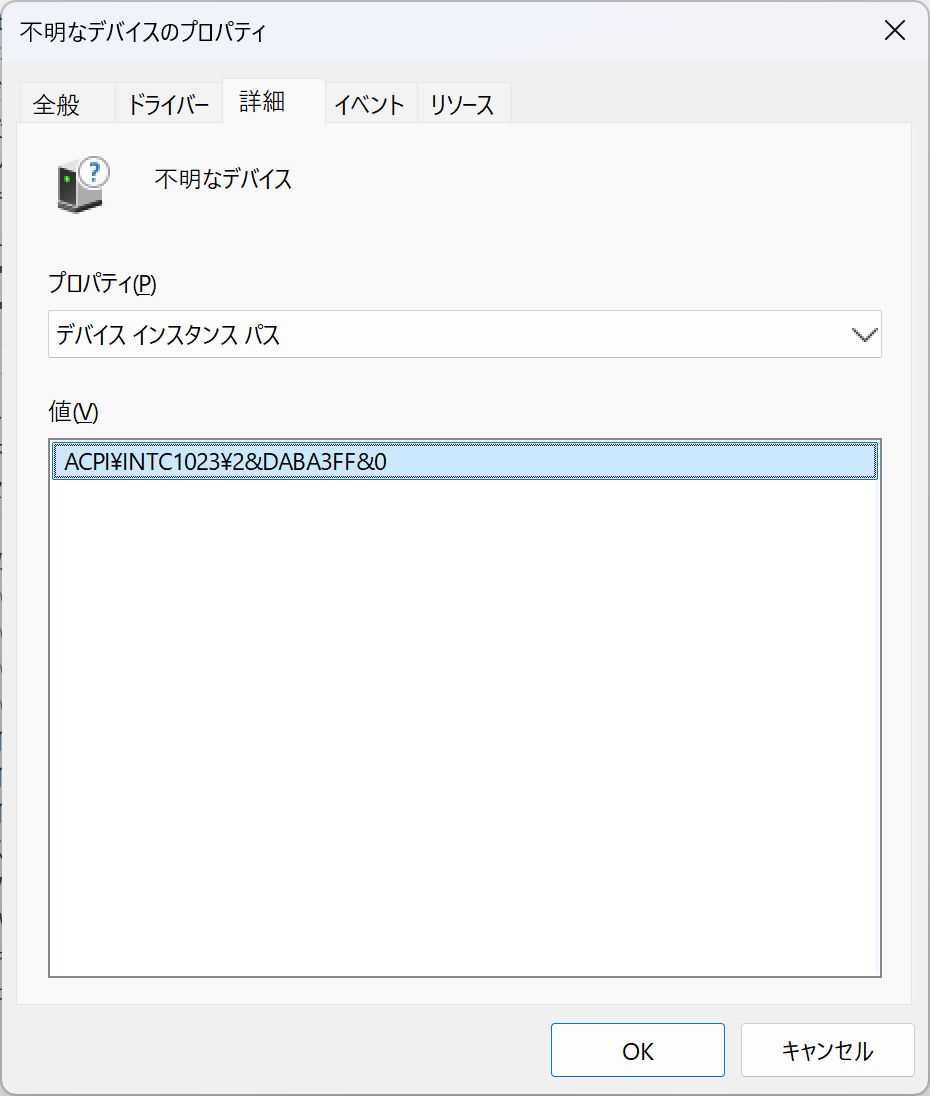
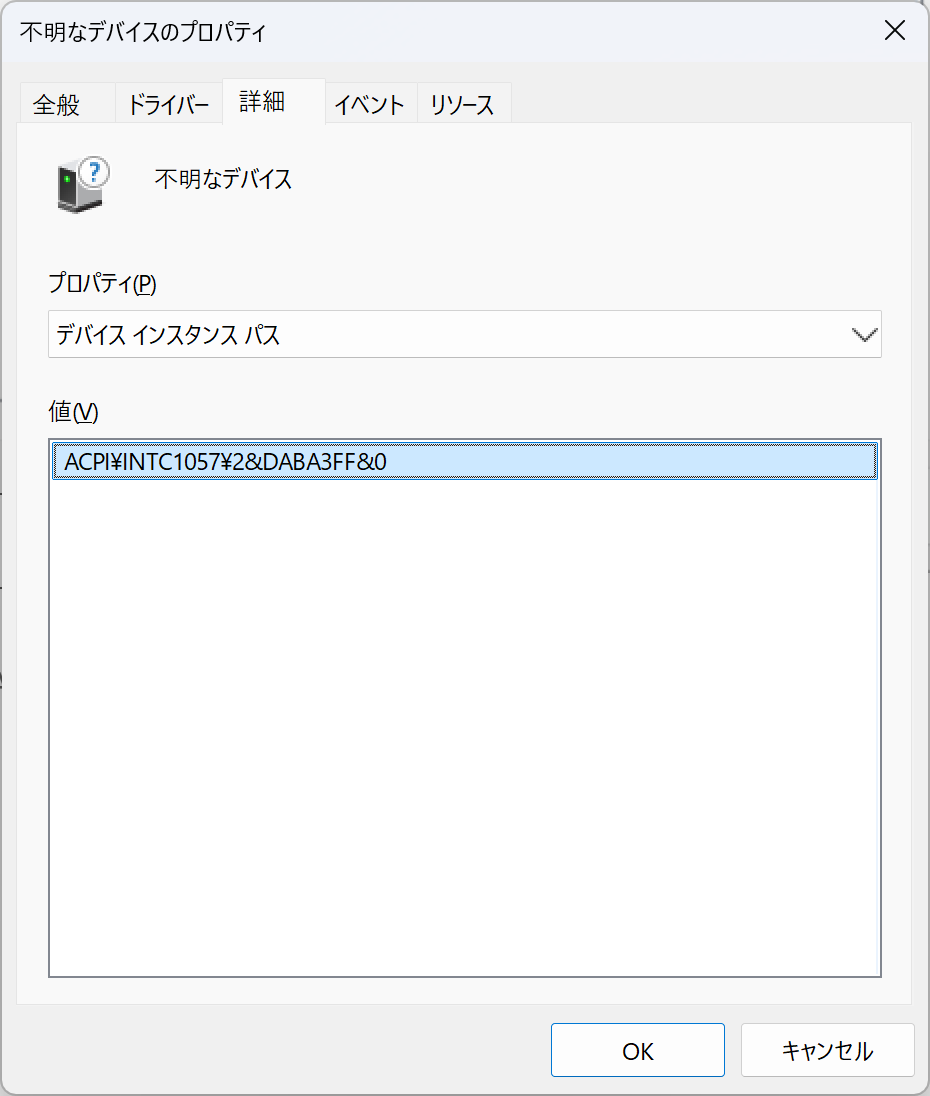
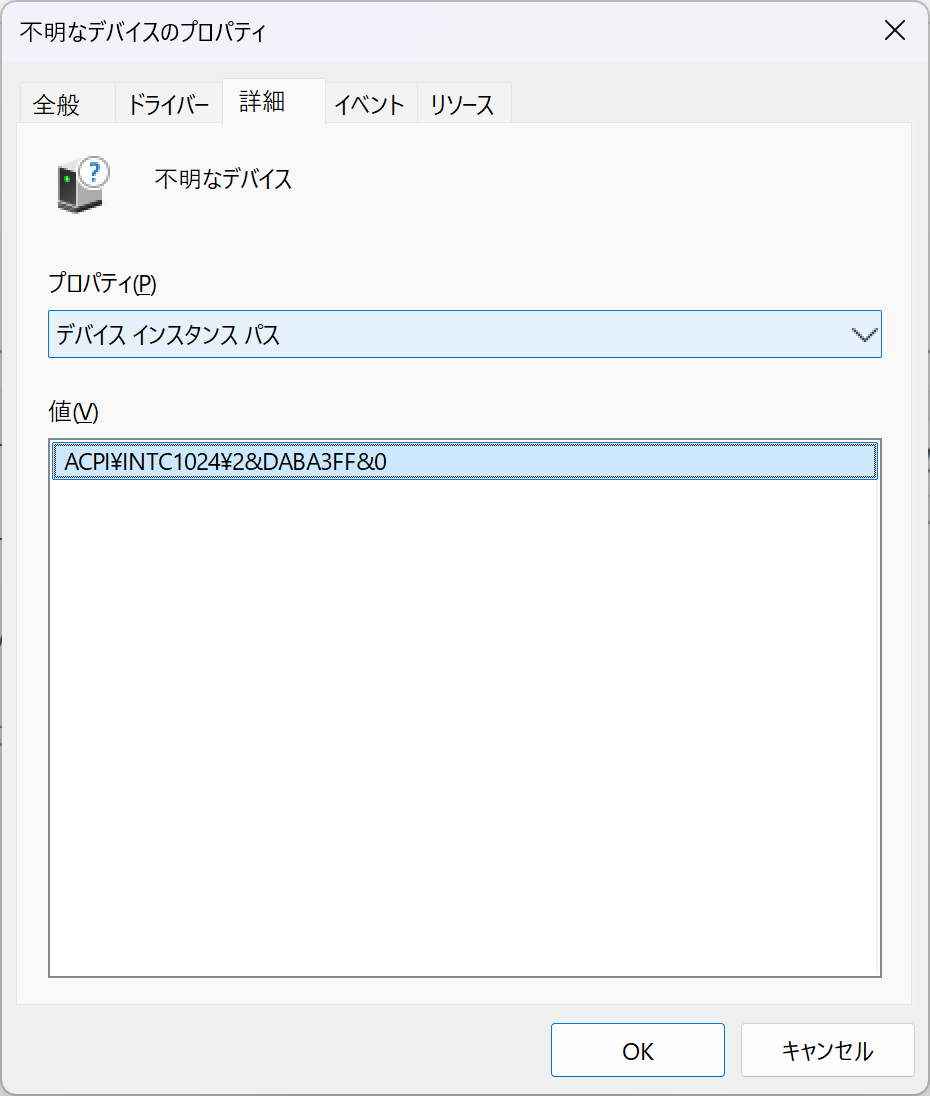
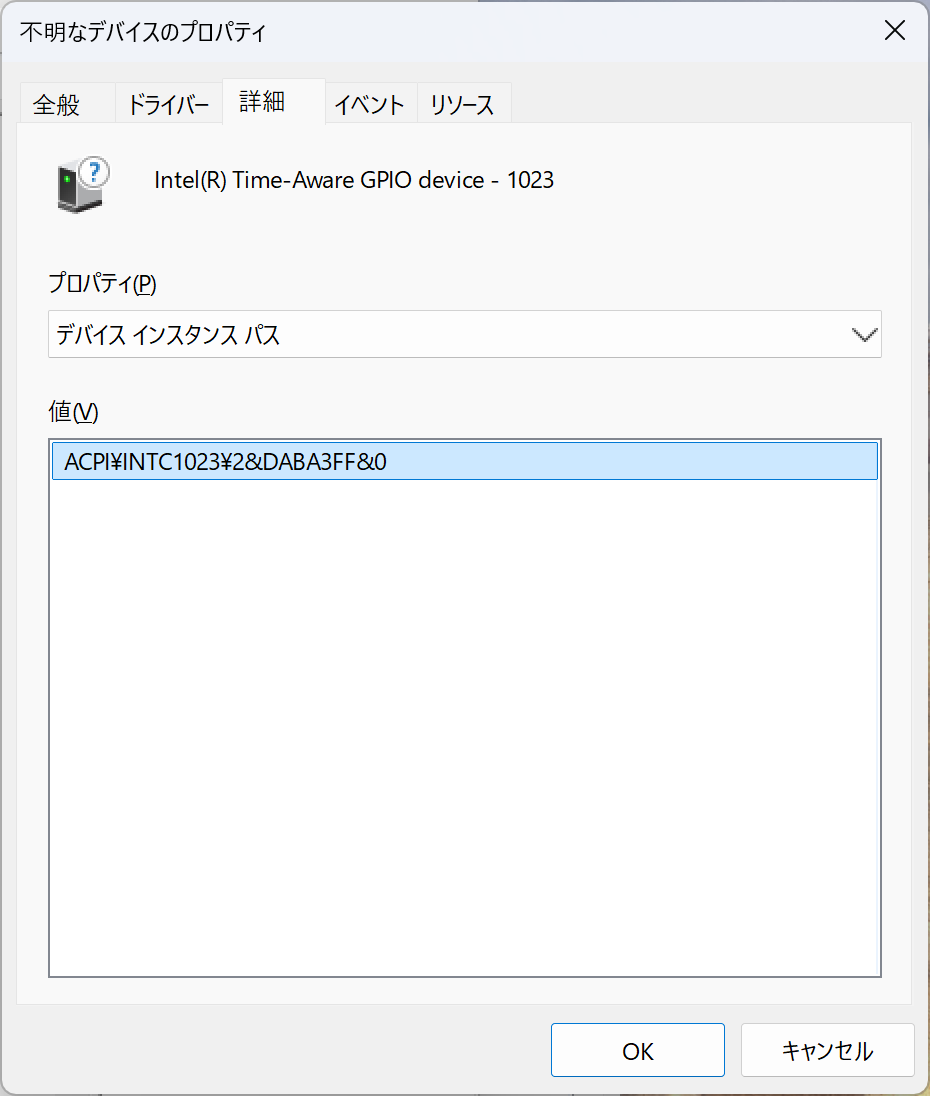
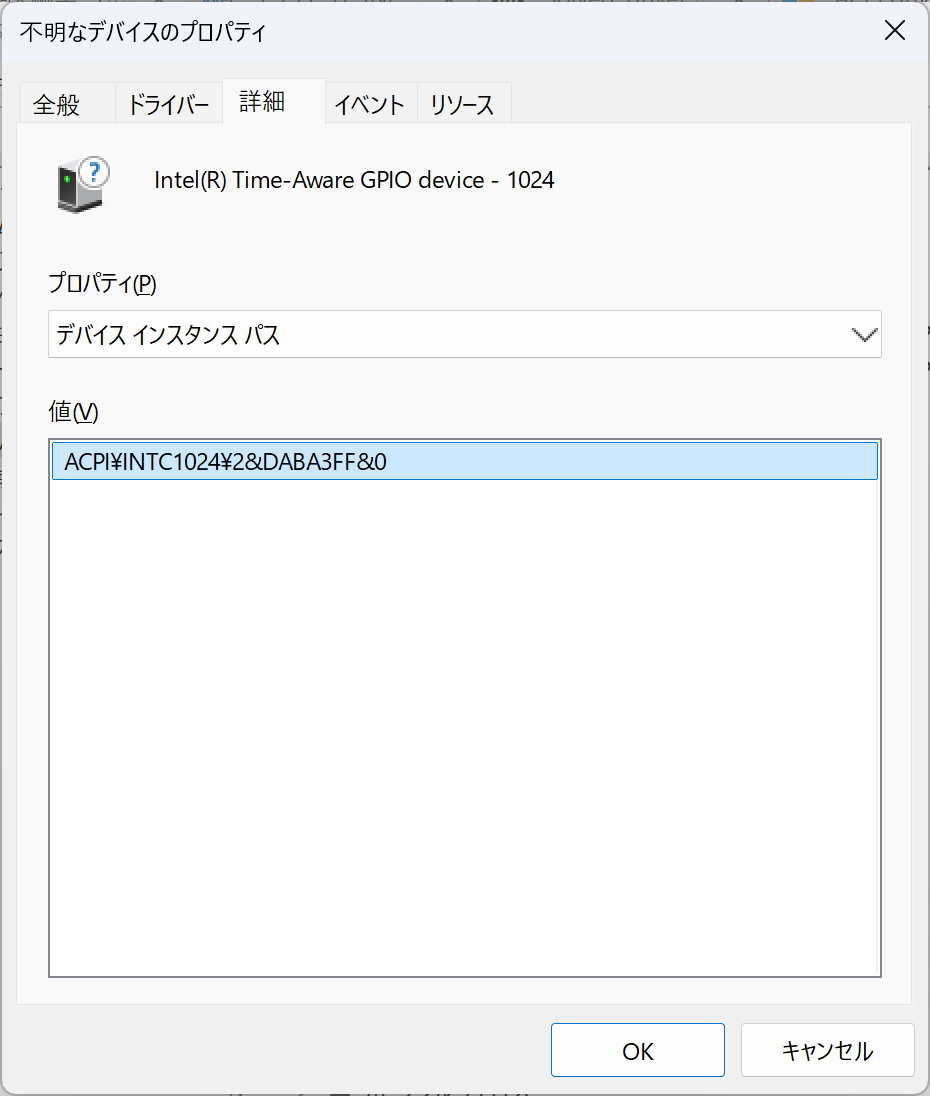
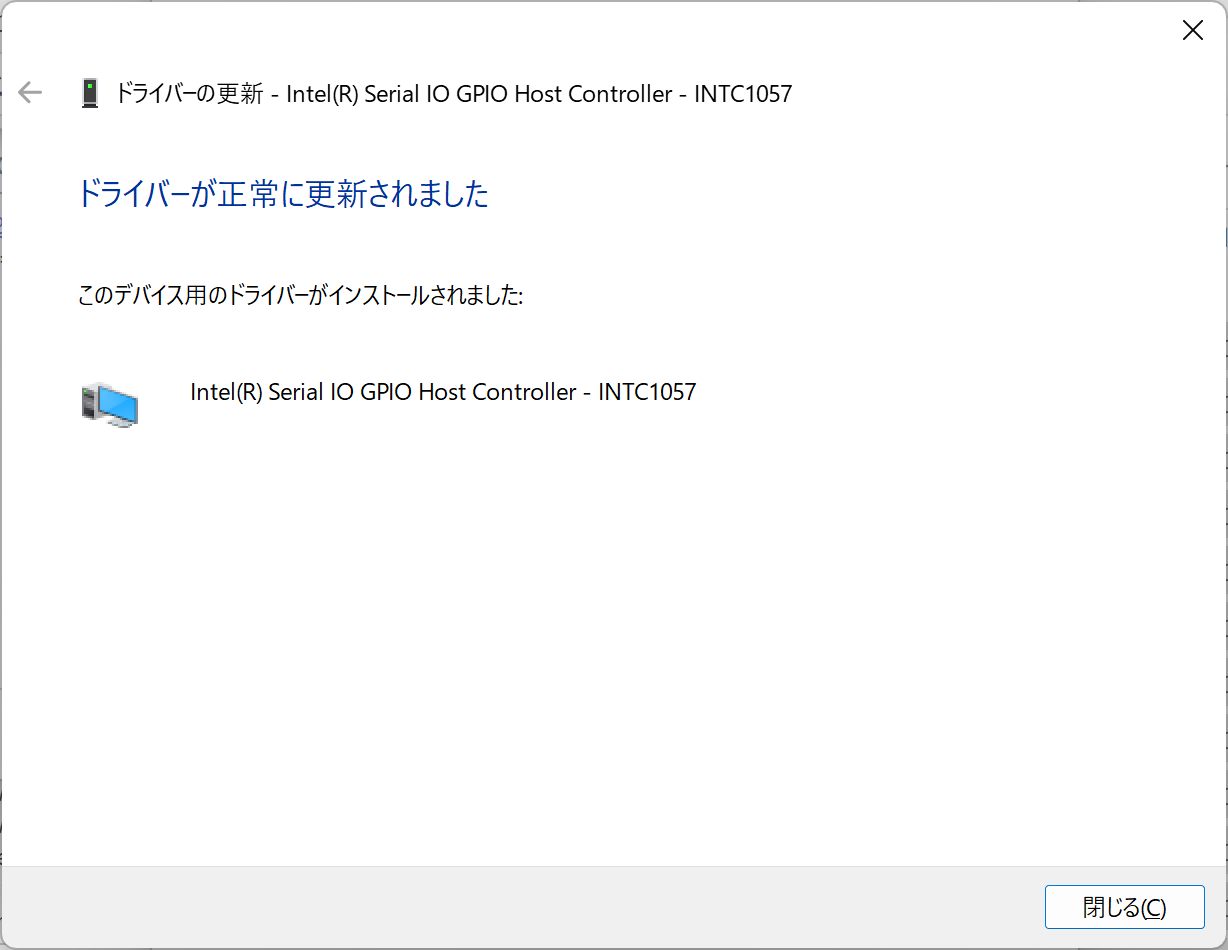
ここからのACPIの不明なデバイス3つを解消するにはMicrosoft Update Catalogで探す前にIntelページからドライバを入手する必要があった。

不明なデバイス
ACPI\INTC1023\2&DABA3FF&0

不明なデバイス
ACPI\INTC1057\2&DABA3FF&0

不明なデバイス
ACPI\INTC1024\2&DABA3FF&0

まずは、下記からINFをインストールすると、不明なデバイスが2つ消える。

ユーザーサポート インテル® Chipset Software Installation Utility

残ったものについてはMicrosoft Update Catalogで捜索する

Microsoft Update カタログ

これでデバイスがすべて認識した。

再インストール後にアプリ一覧を比較すると、プレインストールに存在していたが、再インストール後にないもので、システムの動作に影響がありそうなものをあげると以下のものになる。

Intel(R) Arc Software & Drivers

Intel(R) Computing Improvement Program

Intel Arc Control

Intel Driver & Support Assistant

Intel Unison (なお、Unisonの提供は 2025/06で終了済)

Realtek High Definition Audio Driver

インテル グラフィクス・コマンド・センター

インテル シリアル IO

インテル マネージメント・エンジン・コンポーネント

逆に再インストールで追加されているものは以下の2つ。まあ、copilotなので無視。

Copilot

Microsoft 365 Copilot

足らないアプリケーションについて、まずは「インテル® ドライバー & サポート・アシスタント」をインストールして、実行

実行するとWifi/Bluetooth/グラフィックスドライバの更新がインストールされた。

リストを確認すると、更新と同時に”Intel(R) Computing Improvement Program” と “oneAPI Level Zero”がインストールされていた。どちらもGPUコンピューティング関連のソフトウェアと思われる。

プレインストールにあった「Intel ARC Control」は古いバージョンで、現在は Intel Graphics Softwareに統合されたみたいなので不要の模様(単体ではダウンロードできない)

インテル® グラフィックス・コマンド・センターはMicrosoft Storeからインストール

Realtek High Definition Audio Driver, インテル シリアル IO, インテル マネージメント・エンジン・コンポーネントについてはドライバが適用されてるのでわざわざ追加する必要はない。

これで、プレインストール状態と同等になり問題はないと思われる。

カスタマイズ

とりあえず標準で載っていたWifi 802.11ac/Bluetooth 5.0のRTL8821CE は見た目が怪しすぎるしそもそも仕様が古いということでIntel AX210NGW に交換し、WiFi-6E / Bluetooth 5.3 に対応させました。

SSDについては余っていた512GBのM.2 NVMe SSDとM.2 SATA SSDを使ってUbuntu Linuxのソフトウェアミラーリング設定を行って試験運転中です。

さらに、32GB SO-DIMMを買って、増設してみました。

今回買ったのはWINTENのSO-DIMM DDR4 3200 32GBです

他のPCにもさしてみるか、ということで2枚セットで購入して増設しました・・・

結果無事32GBを認識しました。

とりあえず現状簡単にできる範囲でのカスタマイズはもうないなぁ、といったところです。